
Learn why you should enhance your search engine optimization (SEO) strategy with link building. And how to do it.
Link building is an SEO tactic that involves attracting other websites to link to your website. So search engines like Google may view it as more authoritative and rank it higher in organic search results.
Basically, Google considers certain types of links from other websites ( Backlinks ) is like confirmation. The higher the quality and quantity of backlinks pointing to your website, the more trustworthy it seems.

For example: tools Backlink analysis by Semrush shows that bbc.co.uk has backlinks from over 1 million domains. Includes reputable sites like cdc.gov, microsoft.com, and britannica.com.

Google search algorithm take this strong backlink profile into account when determining whether and to what extent bbc.co.uk should be included in relevant search results. And as a result, it has the ability to rank the website well.
Of course, there are many other ranking factors that Google considers. But 8 of the top 20 links involve backlinks, according to our research .
It is possible to acquire backlinks naturally over time. But proactive link building can help you gain or maintain a competitive advantage in search. As long as they are the right type of links.
Some backlinks are more valuable for your SEO than others. Some have no effect at all. And those obtained using spam practices (sometimes called Toxic backlinks ) may be harmful.
Here are the key factors to consider when building backlinks:
In general, the more authoritative the referring (linking) website is, the more valuable the backlink is.
For example, a backlink from bbc.co.uk will likely have a much bigger impact on your SEO than a backlink from an unknown blogger.
Semrush measures a website’s trustworthiness using a metric called Authority point —has a score out of 100. It considers three main factors:
If you use Link building tools To find sites that might link to you when asked, you can review their Authority Score in the “AS” column.

But don’t worry about accumulating backlinks from less reputable sites. Those are consistent with a balanced backlink profile.
As the BBC profile shows, it’s normal to have more backlinks from low authority sites and fewer from high authority sites.
It is usually better to build SEO links from websites that are highly relevant to your website. Because it shows you are respected by experts in the field.
It is better if a backlink appears in highly relevant content.
Let’s say you have three backlinks to your line of basketball shoes:
The more prominent the backlink is on the page, the more valuable it is for SEO.
This is because Google can consider the likelihood that a reader will click on a link based on its location. This is called the “rational surfer model” and is described in This patent .
For example, links located in the sidebar, in the footer, and low in the page’s content may not be as valuable as links higher in the page’s content.
In general, it’s best for your backlink to appear early in the main content.
Like this:
Link back to link text description (clickable, linked text) might be better for SEO.

That’s because search engines use anchor text to better understand the content of the linked page. And by extension:
For example, a backlink with the anchor text “basketball shoes” clearly indicates the content of the linked page. Meanwhile, generic link text like “click here” doesn’t provide useful context.
That said, it’s important that link text reads naturally.
If you focus too much on optimizing anchor text for search engines—not for users—Google may consider your site to be engaging in spammy link building practices.
And that can lead to Google penalty harm your search performance.
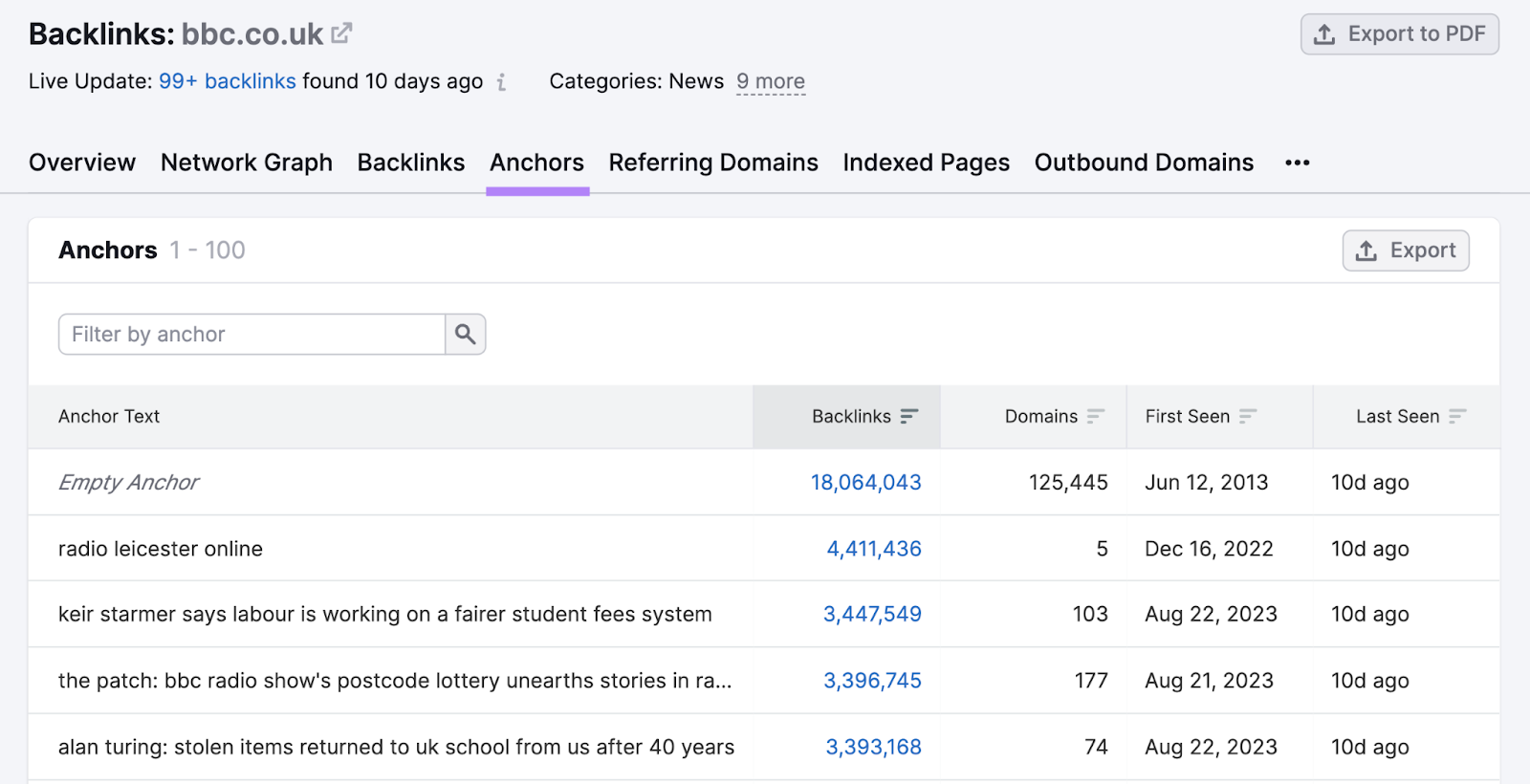
You can check your backlink text using the tool Backlink analysis .
Just enter your domain name and go to the report “ Anchor ”.
Some links contain nofollow attribute (or other attribute) tells Google not to pass ranking power to the linked page.
Here’s a quick overview of those properties:
| Link properties | Representation |
| rel=”nofollow” | Used to identify links that the publisher does not want to endorse. Google will likely respect the publisher’s wishes. |
| rel=”sponsored” | Used to identify links that are paid for by the linking site. Google ignores these links because they are not true endorsements. |
| rel=”ugc” | Used to identify user-placed links (e.g. in comments). Google ignores them because they are too easy to manipulate. |
While they can drive brand awareness and referral traffic, these types of backlinks are unlikely to help your rankings.
In HTML, a link with the nofollow attribute (“nofollow link”) looks like this:
<a href=”https://example.com” rel=”nofollow”>Anchor Text</a>
But the link looks normal on the page.
Standard links that do not contain nofollow, sponsored or UGC attributes are sometimes called tracking link or dofollow links . These are the things you want when building links for SEO.
You can see the nofollow ratio for following links of any website using the Backlink Analysis tool.
Just scroll to the “Link Attributes” chart in the “Overview” report:
Below, you’ll learn about four basic ways to build links. Some of them work much better than others.
Then we’ll share nine specific tactics you can use in your strategy.
When you earn links, other websites will link to your site without you asking.
This can be extremely cost effective. Additionally, you don’t need to worry about spam links Google’s link spam guidelines because you are not responsible for creating them.
The best way to earn links is to create high-quality content that people want to link to—i.e linker primer .
Here are some different types of content that people tend to link to:
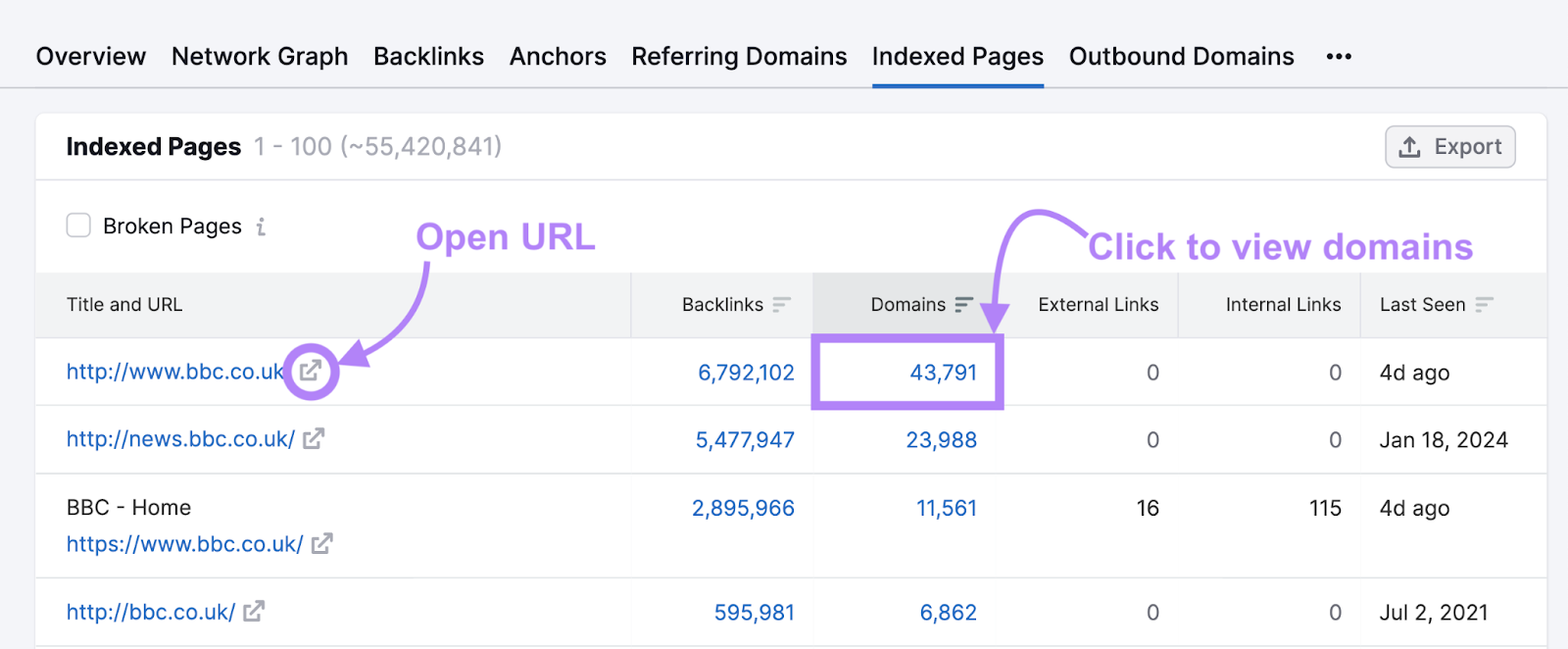
To see which pages receive the most backlinks on your site or your competitors’, enter the domain name into the Backlink Analytics tool.
Then go to reports “ Pages are indexed ”.
The “Domains” column shows the number of different websites linking to the page in the corresponding row.
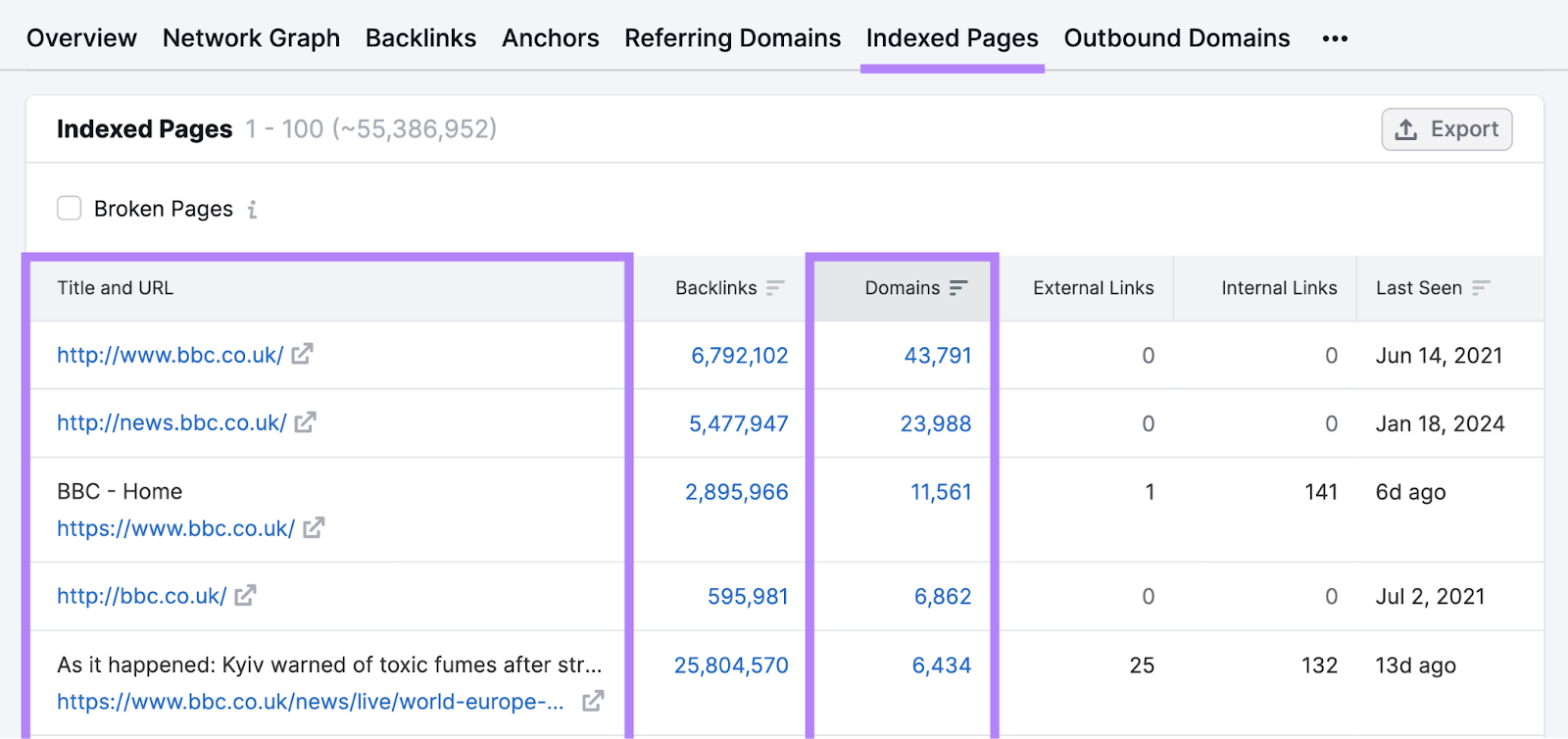
You can click the icon in the “Title and URL” column to see the content for yourself.
And click on the link in the “Domain” column to see where all of the page’s backlinks are coming from.
A link request is when you proactively reach out to a person (or group) and convince them to link from their site to yours.
There are two main reasons why they might link to you:
Semrush’s link building tool finds high-quality leads (sites that might link to you) by looking at your competitors and the keywords you want to rank for.
After setting up your project, go to reports “ Prospect ” to see a list of suggested websites.
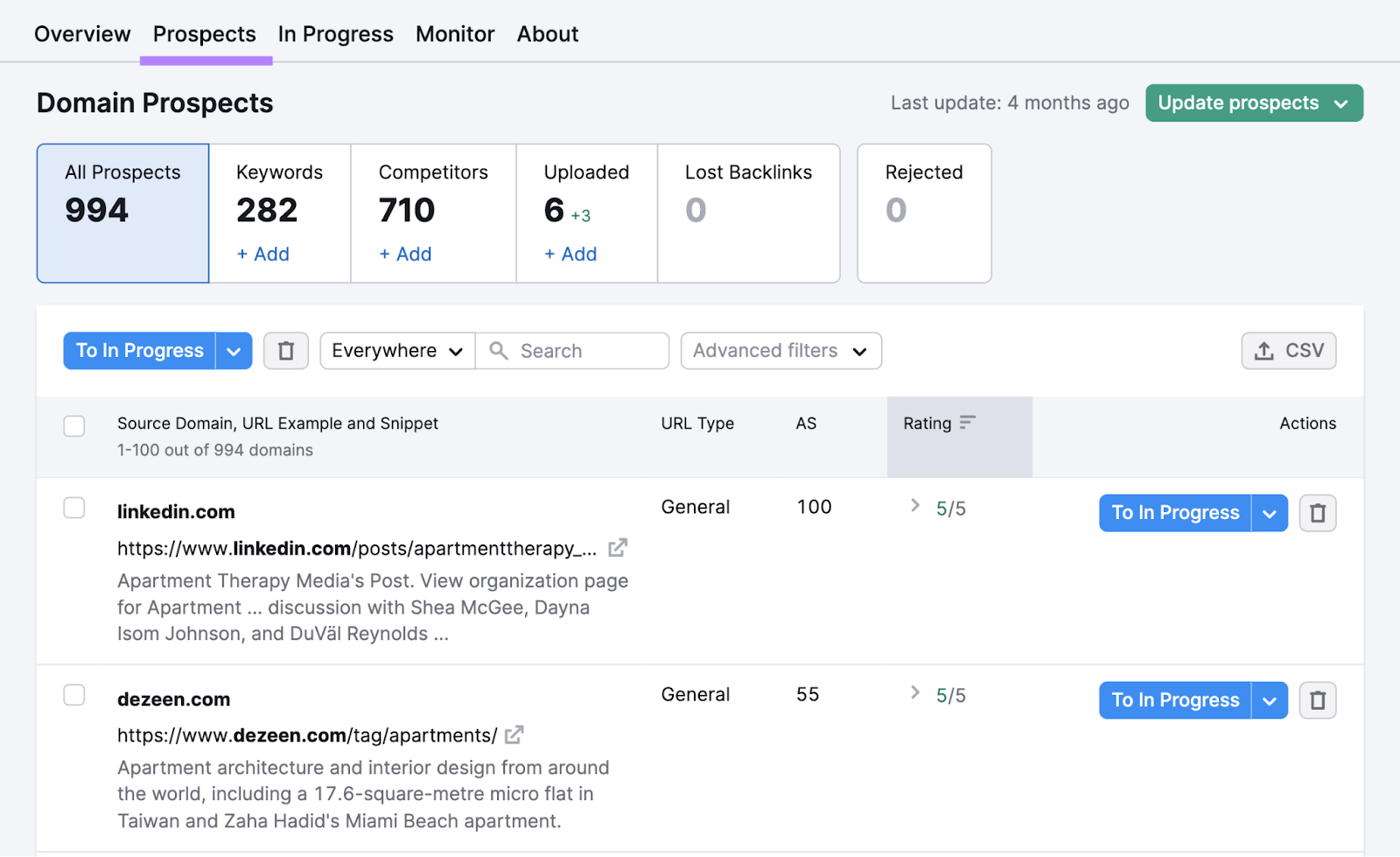
You can then choose which opportunities to pursue. And use tools to manage the entire quality link building process.
Visiting another website and adding your link manually is not a good way to build backlinks. Because Google doesn’t want to count links that you have (or could have placed) yourself.
That includes added links:
You can still add links in these places. To help drive referral traffic to your website.
But only include them where they create real value for users. And not in an effort to create SEO value.
Otherwise, you could be engaging in spammy links and harming your brand image.
You shouldn’t buy SEO links with the intention of influencing your rankings.
In other words, you should only pay for backlinks if they are qualified with a rel=”sponsored” or rel=”nofollow” attribute. (This tells search engines to ignore them.)
If the link is paid Are not Eligible:
To clarify, you can pay for link building services from a freelancer or agency. But the websites hosting your backlinks will not receive any form of payment. This includes money, products, services, etc.
There are many strategies for link building . But here are nine of the most effective options.
Reach out via email is the process of contacting a website (or website representative) to convince them to give you a backlink.
This is important because people can’t link to your content without discovering it. Even the best content needs to be promoted to attract links.
To find potential customers to reach out to, use Link building tools by Semrush .
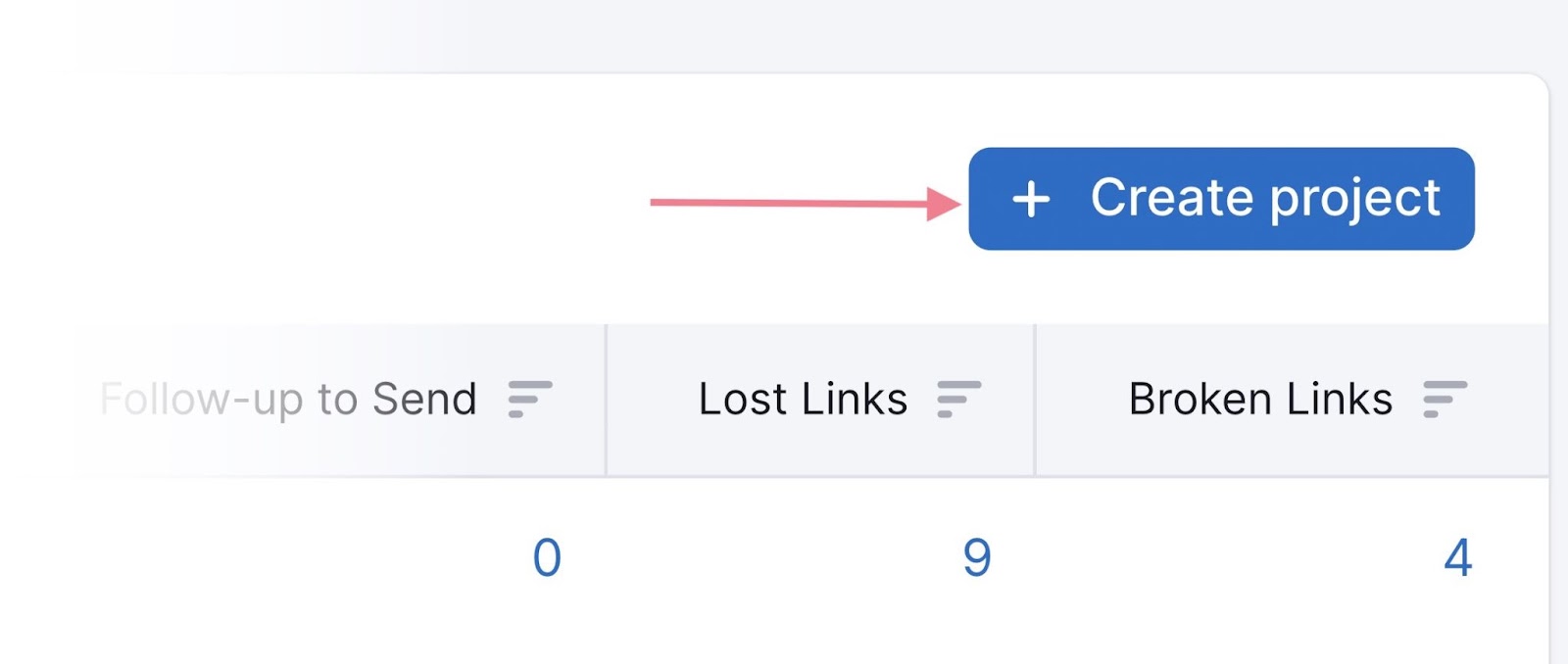
Open the tool and click “ + Create project .”
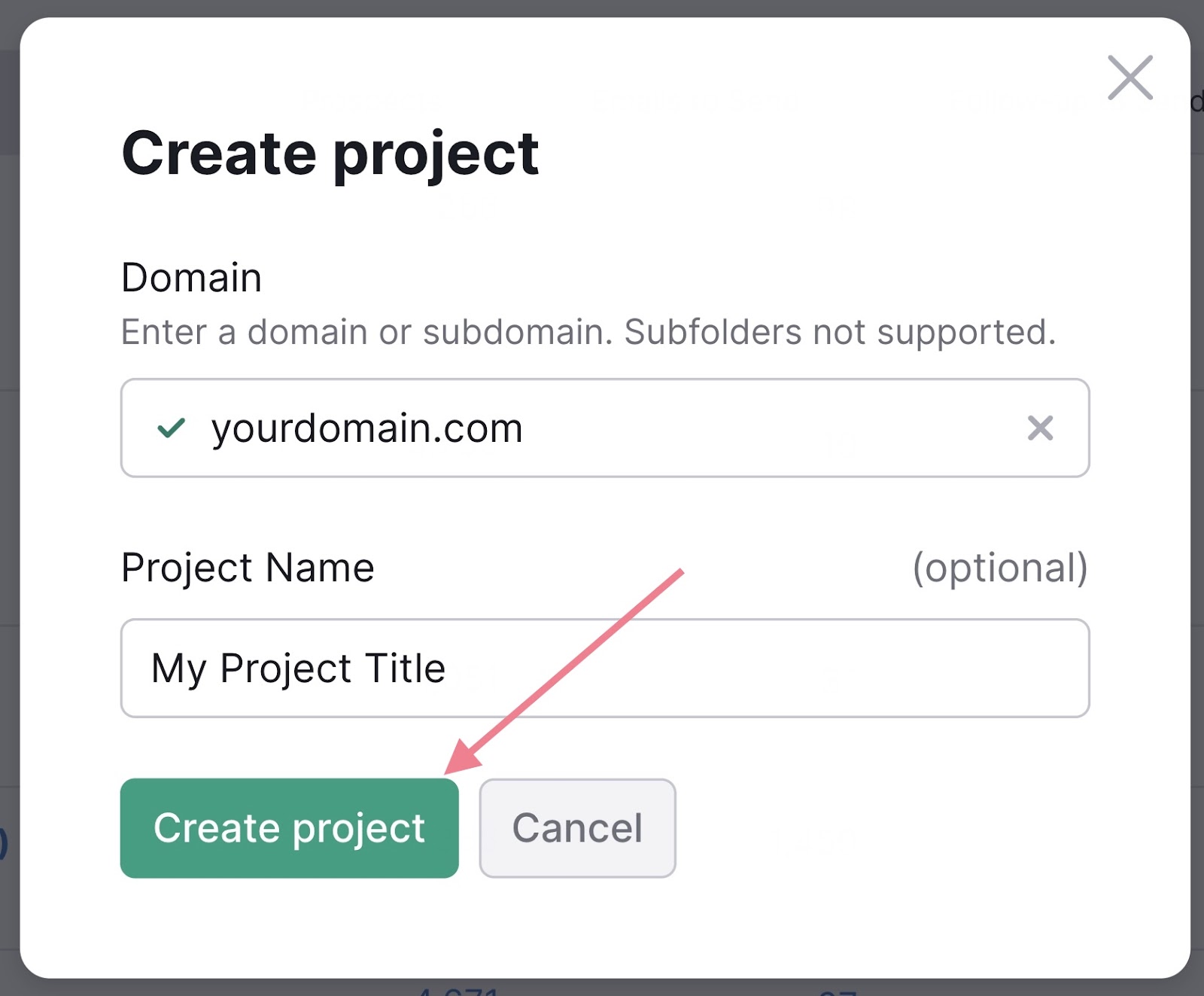
Then, enter your domain, name your project, and click “ Create project ”.
Next, add the keywords you want to rank higher for. These keywords should be related to the page(s) you are trying to link to.
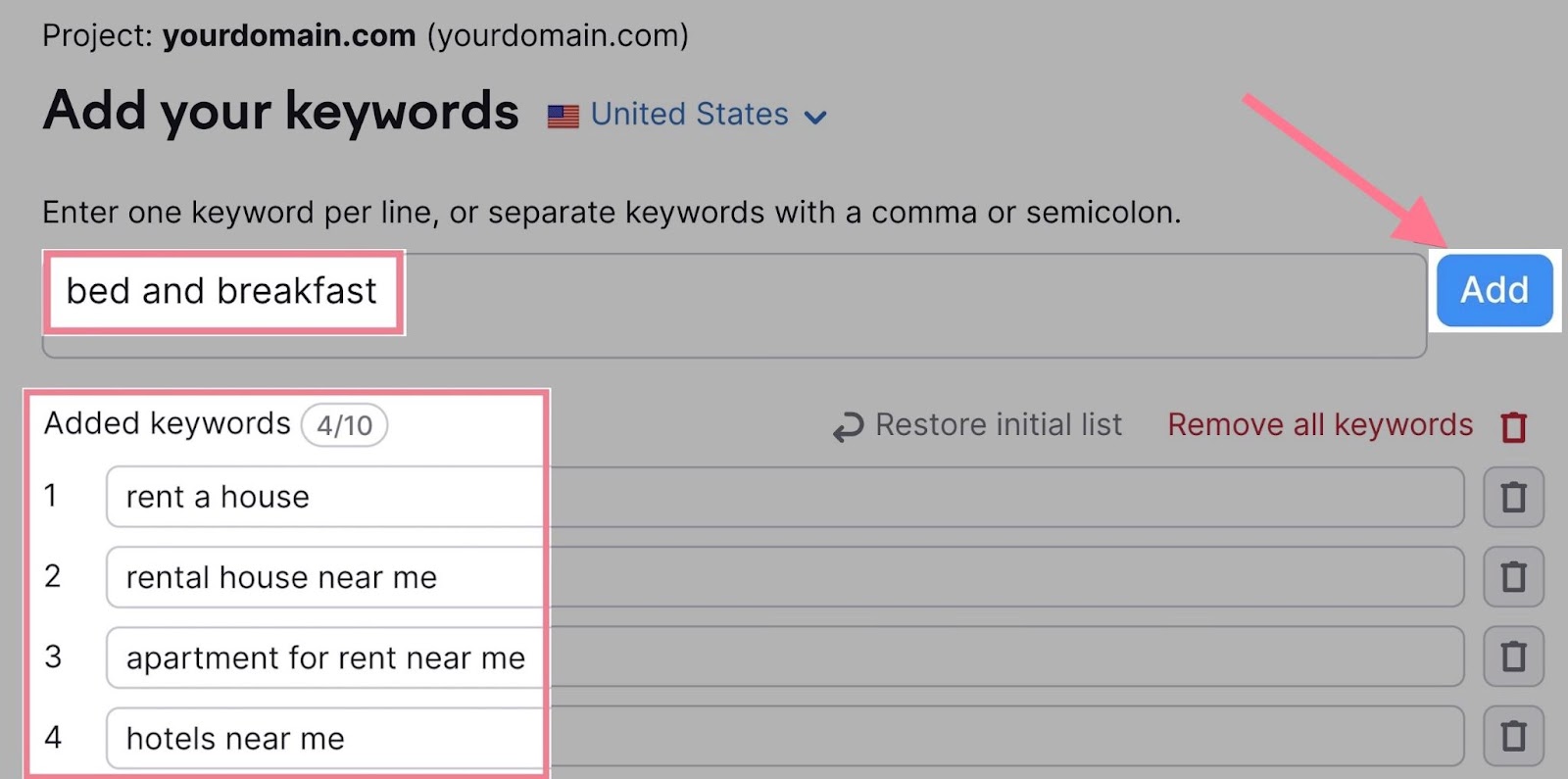
Once you have added your keywords, click “ Competitors ” at the bottom of the pop-up window.
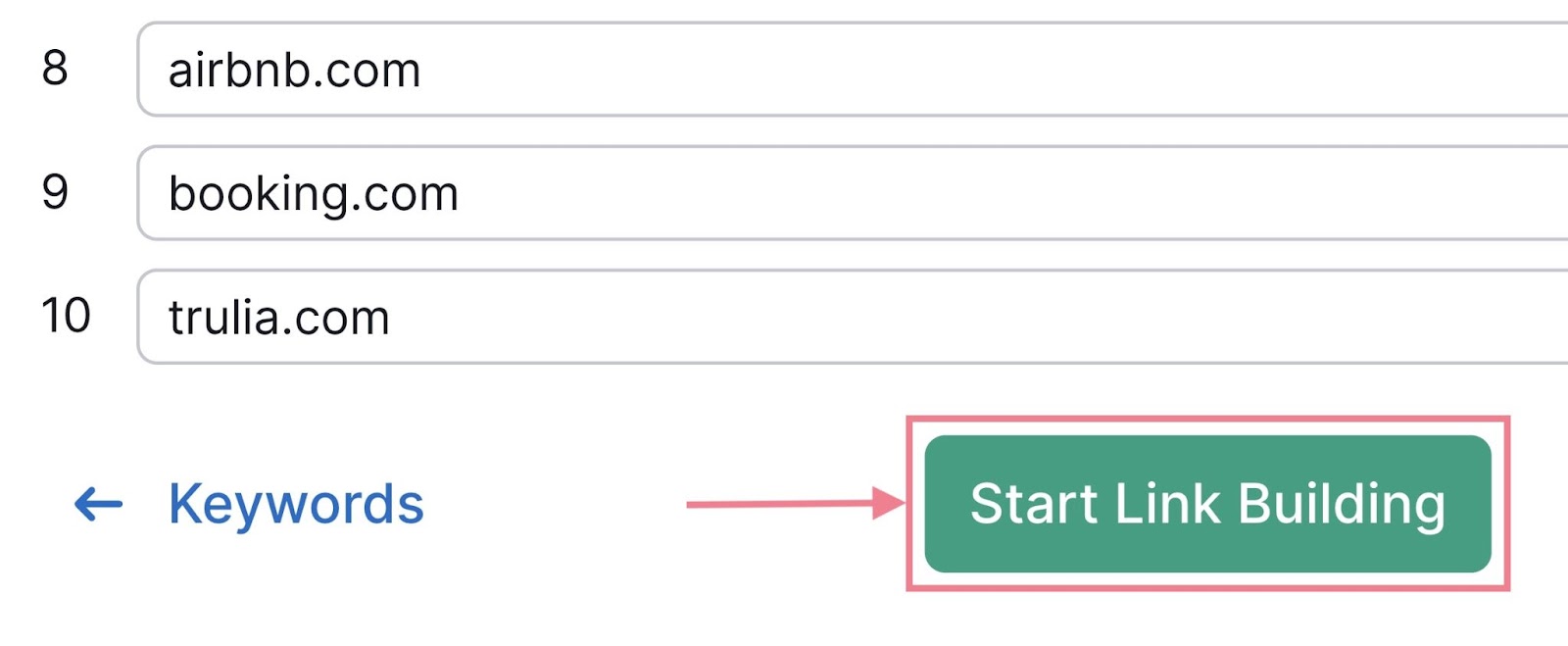
Now, add the opponents you want to outperform.
And when you’re done, click “ Begin link building ”.
Once the tool has analyzed the data, click “ View leads ” to see who you can contact for backlinks.
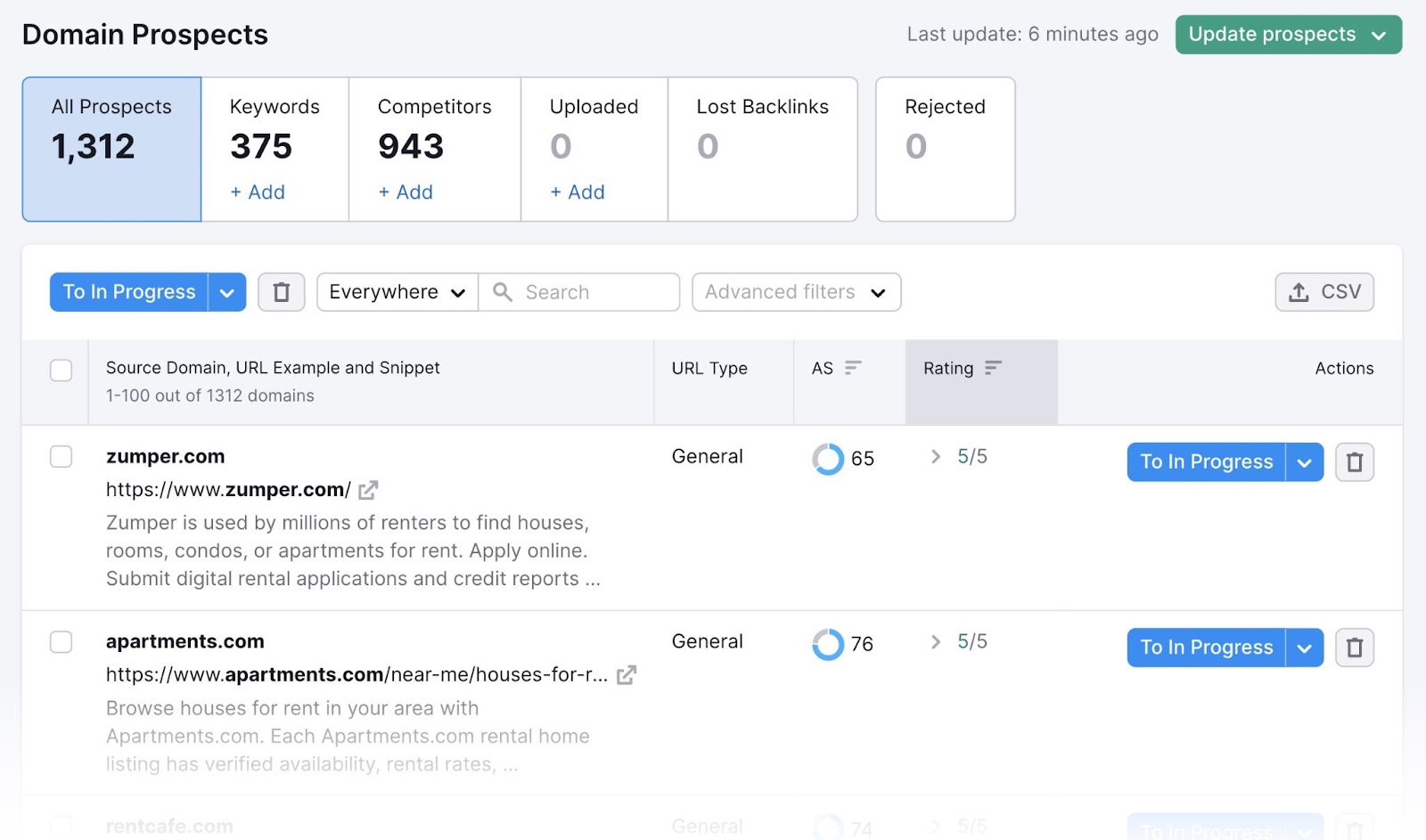
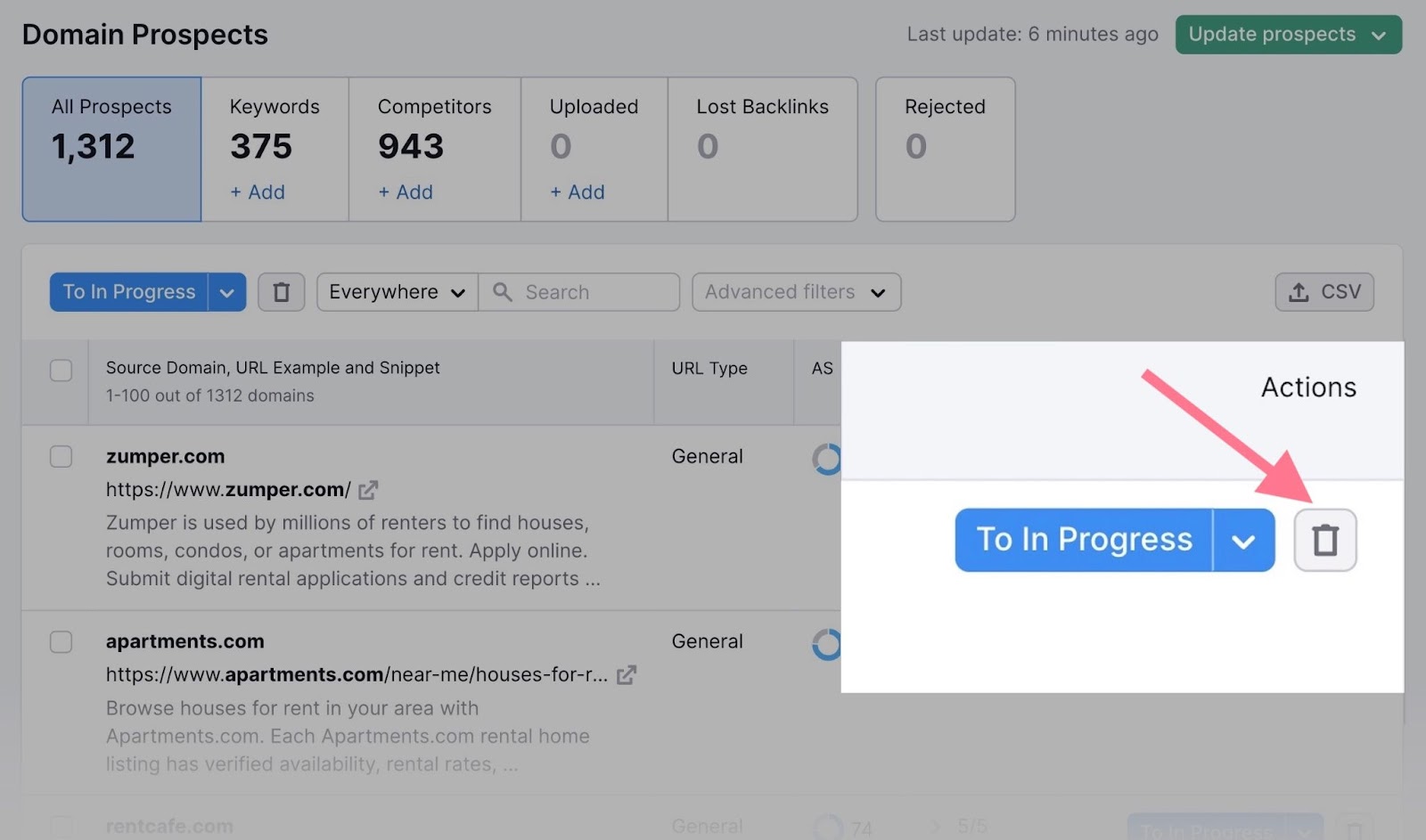
You can reject leads you don’t want to reach from this screen. Like if the website is not relevant. Or you don’t want a link from that site.
To reject a lead, click the trash icon.
Like so:
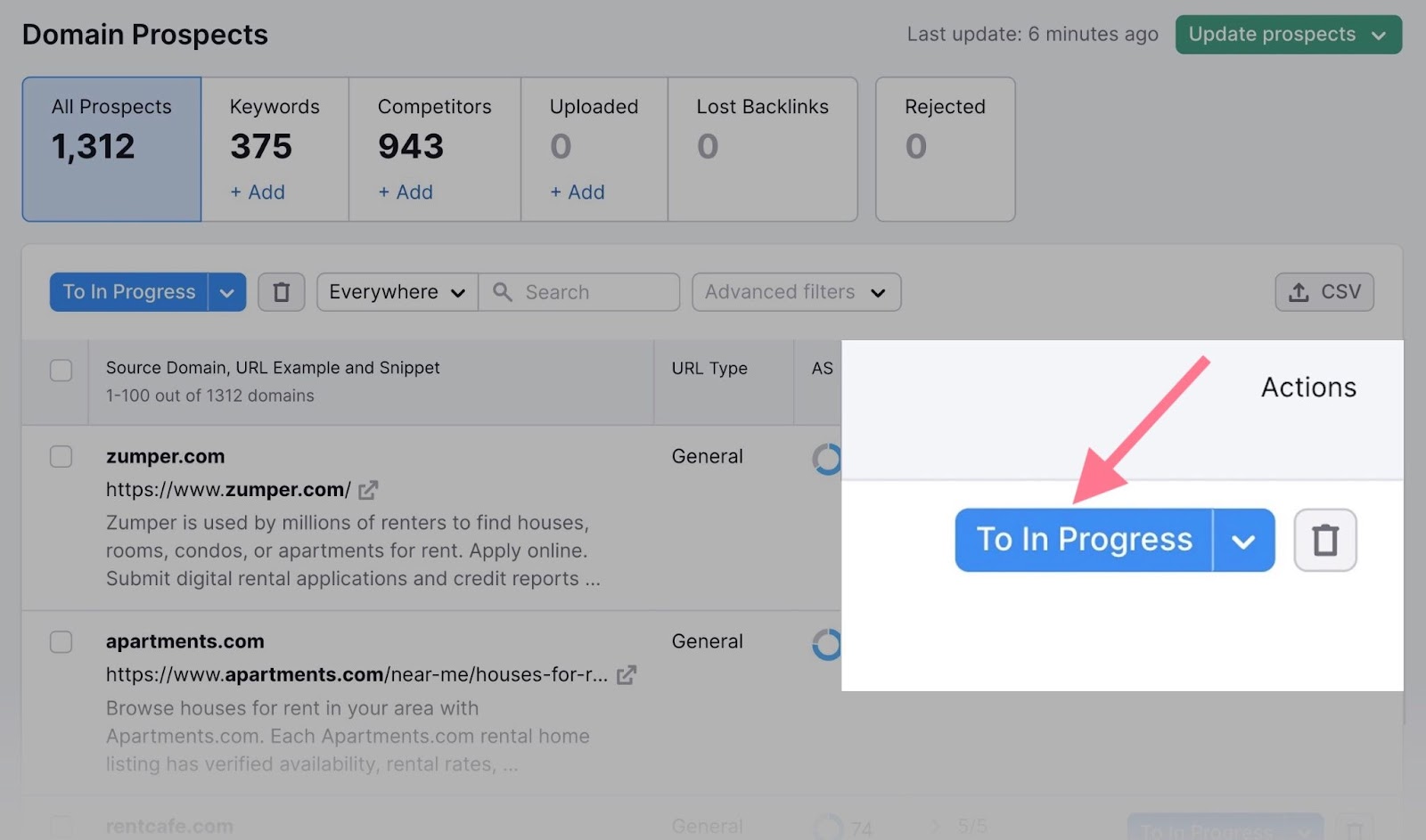
For potential customers but you want to contact, click the button “ In progress” and they will be added to the “In Progress” tab.
From the tab “ In progress ”, you can contact any potential customer through the connected email account.
Simply click the “ Contact ”.
The screen will expand to display the email template with default information.
Like this:
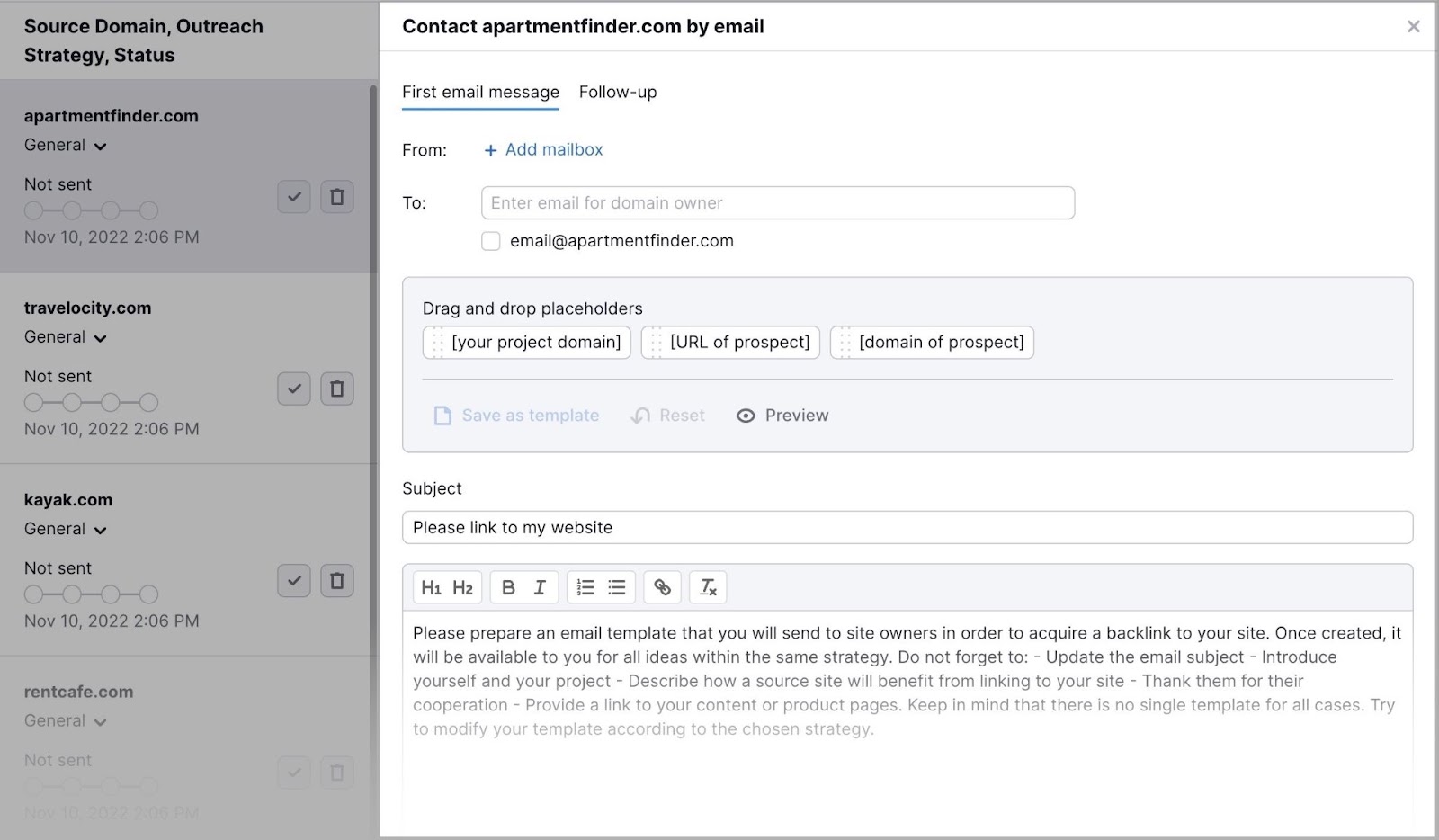
Now, customize your email to make your pitch specific to the prospect.
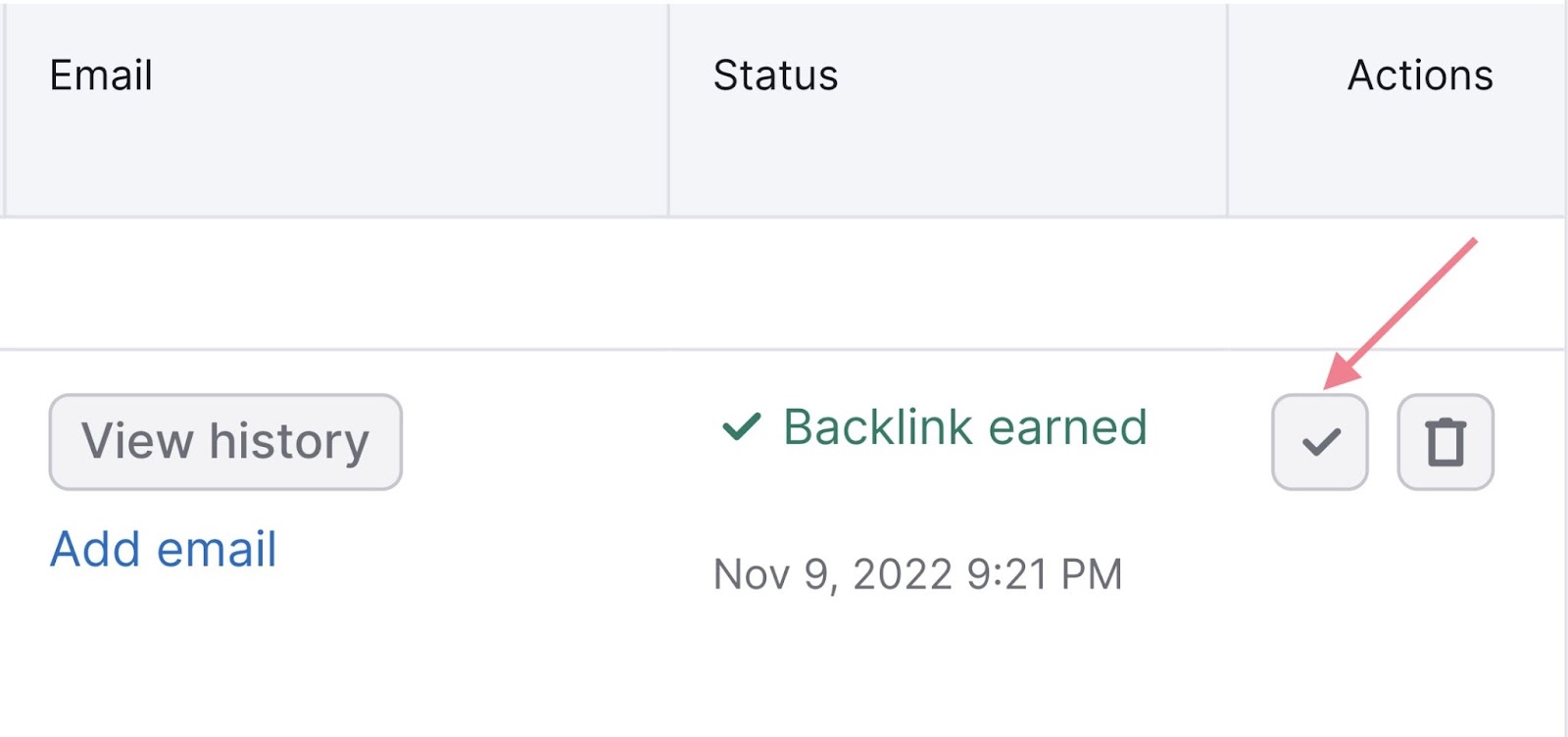
After you send an email, the “Status” column will show whether your email was sent, received, opened, or replied to.
And you can click the check mark in the “Action” column once you receive the backlink.
If you work with reporters to provide information or assets, you can get backlinks by giving attribution.
You can find these requests through services such as Connectively (formerly known as HARO/Help to Reporter). They look something like this:
Just search for inquiries that are relevant to your expertise. Then, send your pitch to reporters through the platform.
You can also find requests by browsing hashtags like #JournoRequest on X (formerly Twitter).

That can help you get backlinks like this:
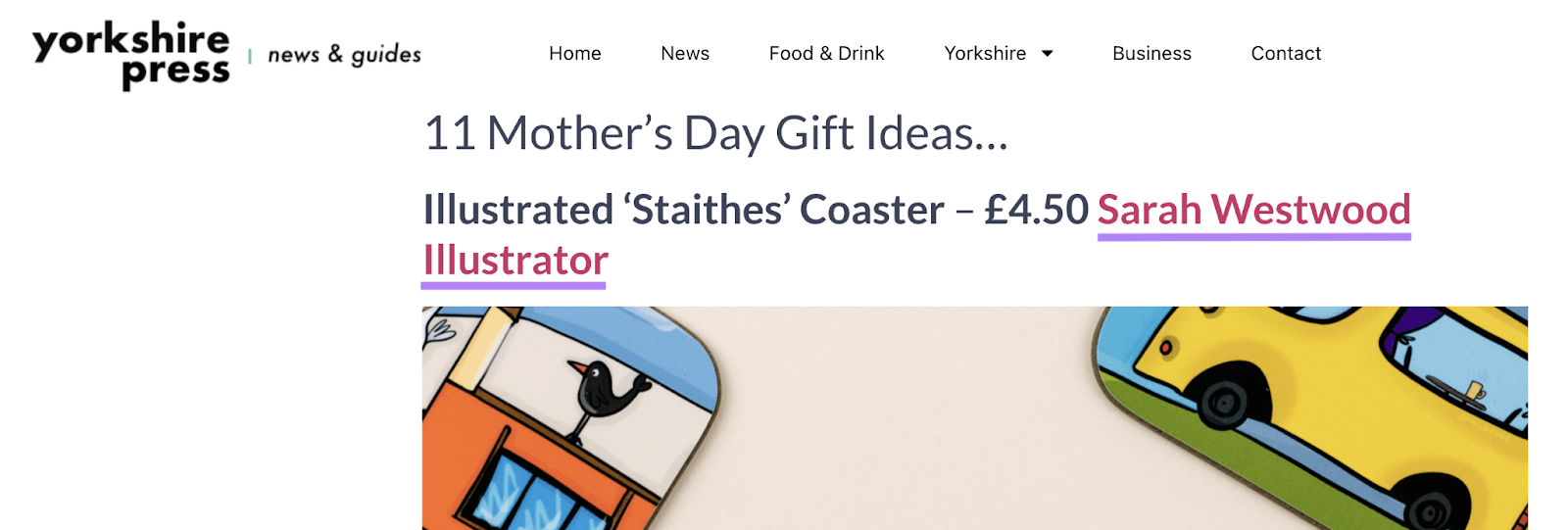
Broken link building is the process of finding inactive backlinks and convincing publishers to replace them with active links to your site.
It’s an effective tactic because no one wants to send visitors to broken pages. And you are providing a convenient solution.
You can find your competitors’ broken backlinks using Semrush’s Backlink Analytics tool.
Enter your competitor’s domain name and click “ Analysis ”.
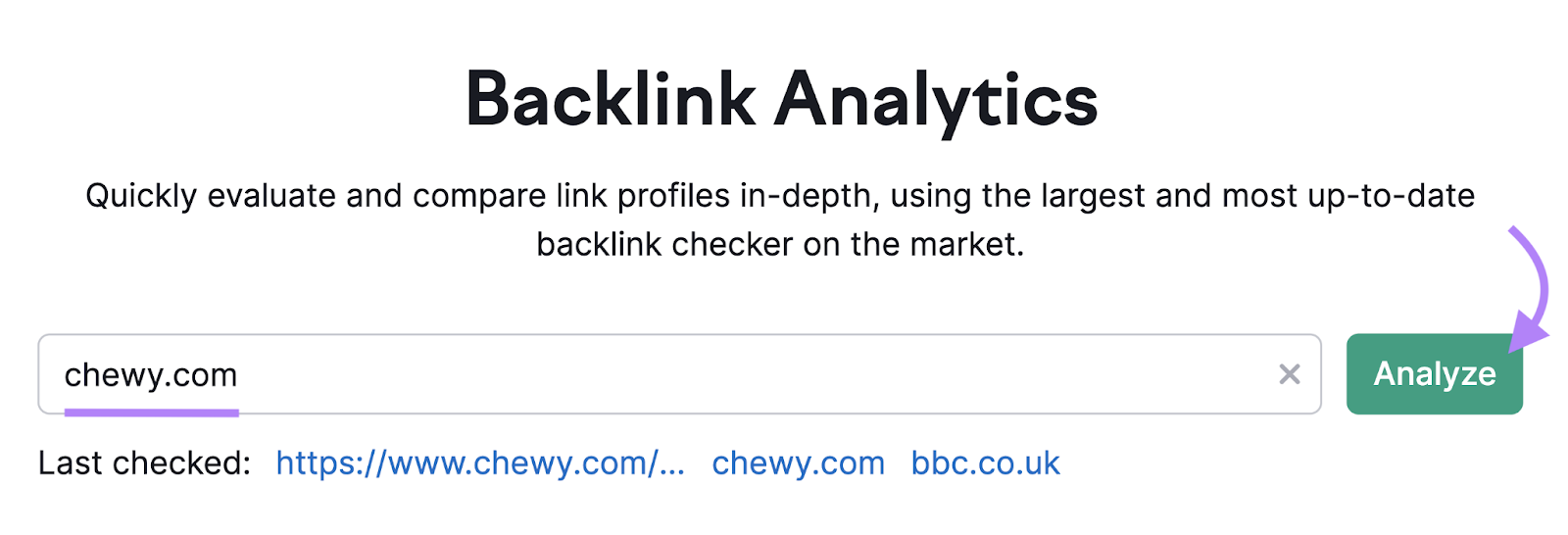
Then go to reports “ Page is indexed ” and check the box next to “Broken page”.
Like this:
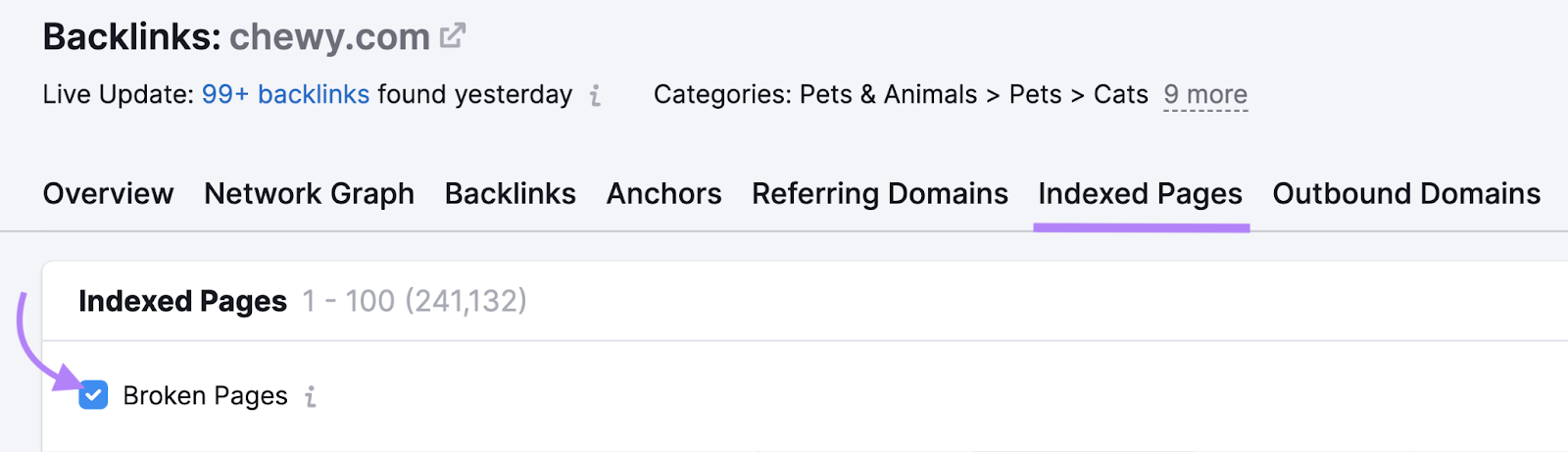
You will see a list of broken pages on your competitor’s site. Sort by number of “Domains” (how many different websites link to them).
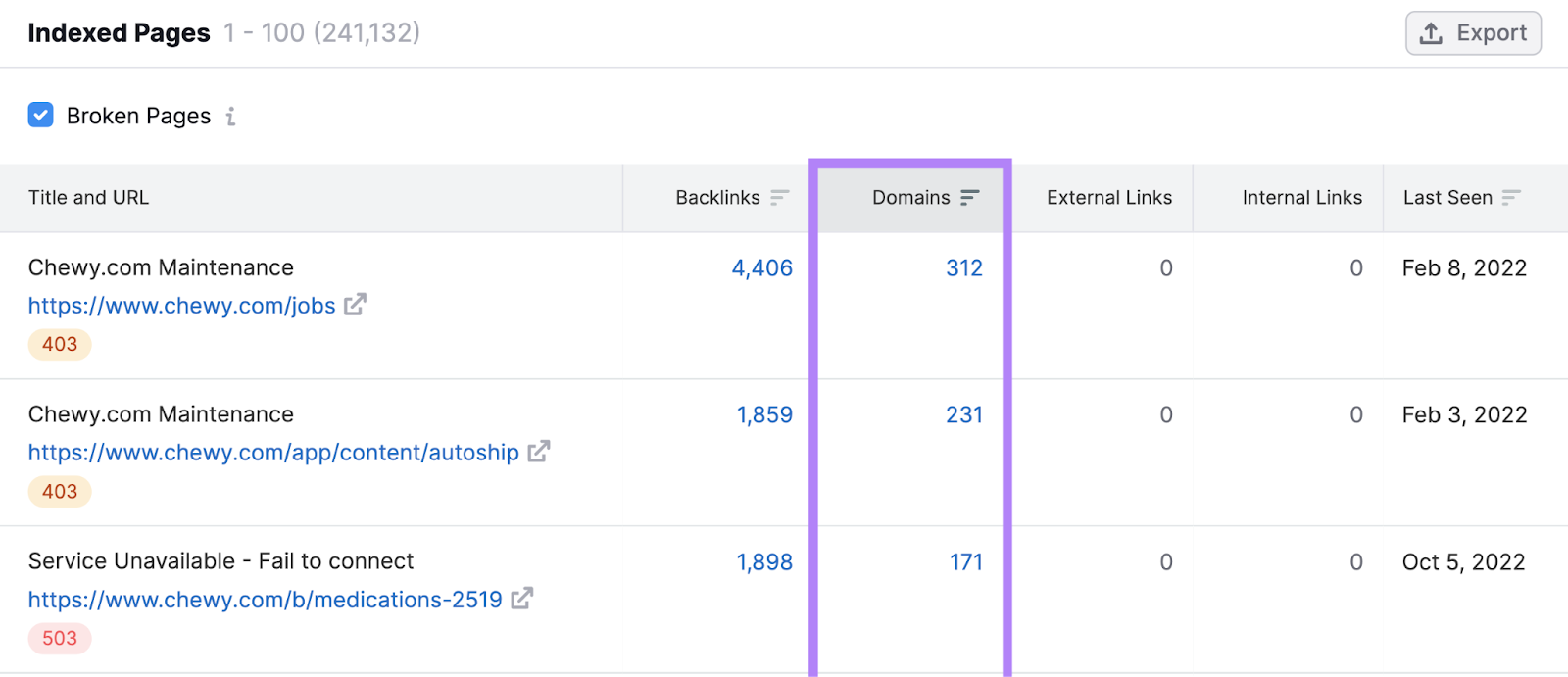
Starting at the top, find a broken page for which you have a suitable alternative.
(You may need to put the URL in Wayback Machine to see what it looked like before.)
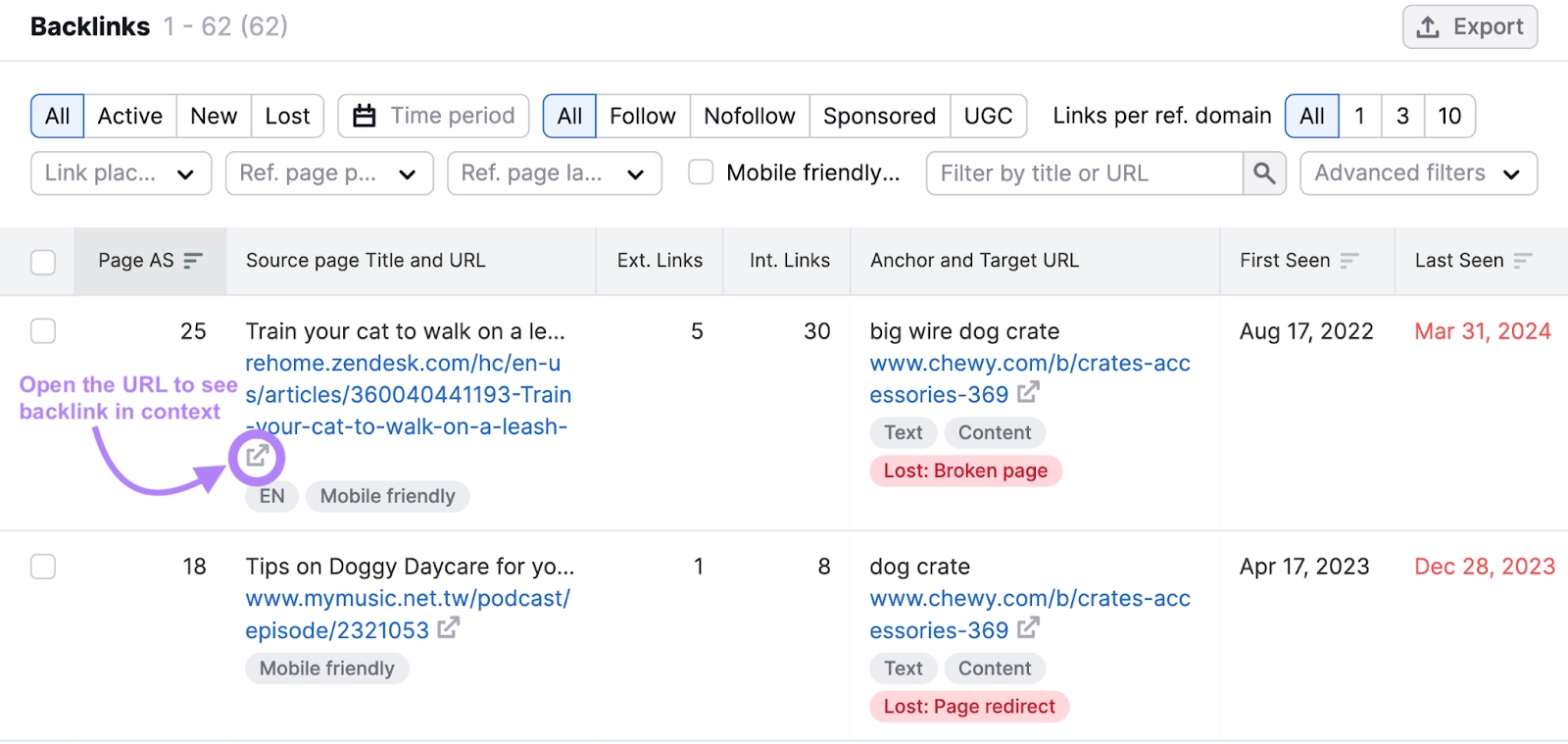
When you find a backlink, click the number in the “Backlinks” column to see all of the page’s backlinks.

These are backlinks that you can inherit. Sort by “Page AS” (page authority score).
Starting at the top, look for the backlinks you want to inherit.
You can click the icon along the URL to see the backlink in context. And see if it matches your suggested link.
If you want to pursue an opportunity, find an email address for the appropriate contact. And send them your suggestions.
Then, repeat this process as many times as you like.
Linkable content is a piece of content that has good potential to earn backlinks naturally. Such as a tool, research report, or in-depth guide.
For example, Semrush’s blog post on content marketing statistics has backlinks from over 2.5k domains.
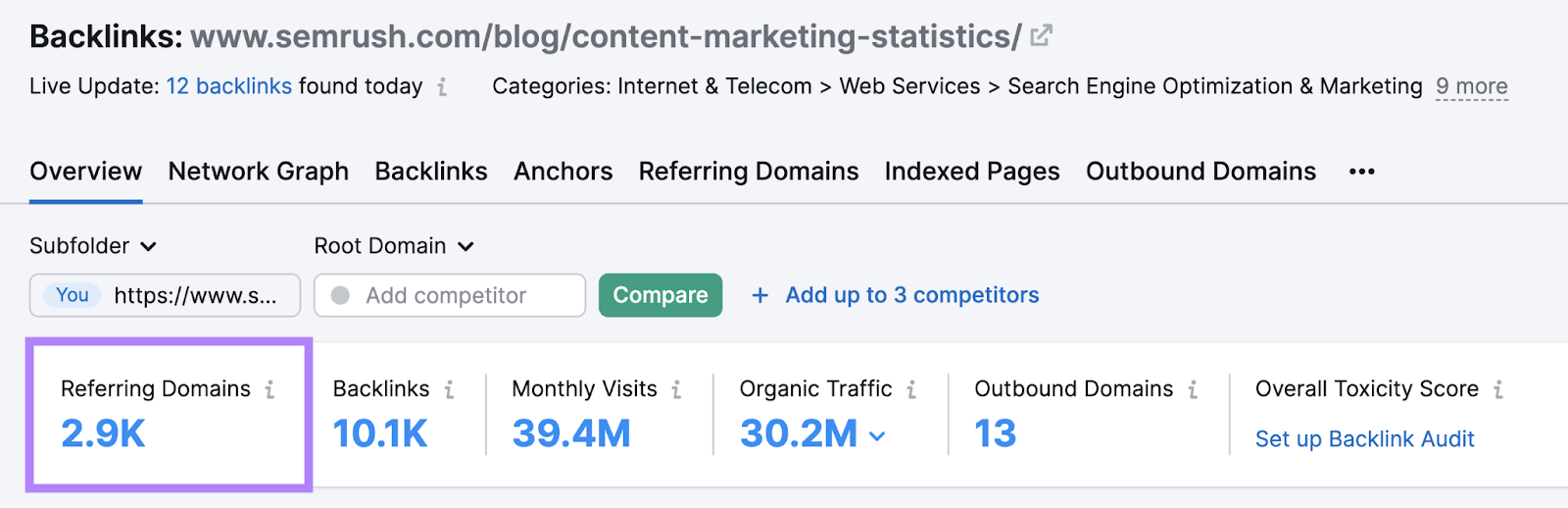
This is because it is a useful source to cite when writing about the importance of content marketing.
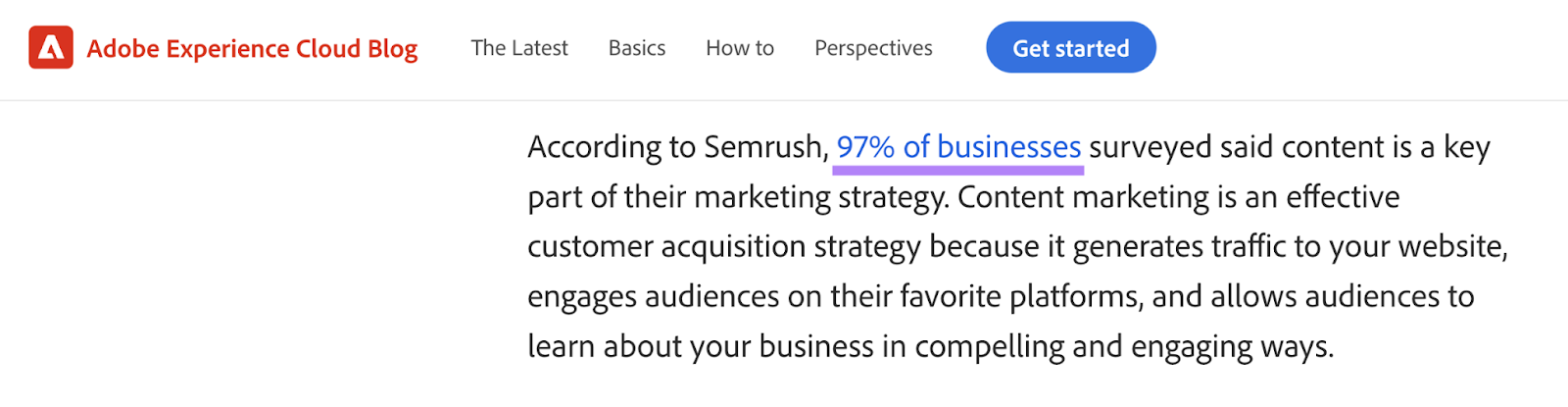
Here’s what our backlink from Adobe to that post looks like in context:
Unaffiliated brand mentions are when a website mentions you or your business without linking to you.
Like this:
With a gentle nudge, many website owners will be happy to turn your unlinked mention into a link.
To quickly find unlinked mentions, use the Brand Monitor app.
Once registered, create one “New query”.
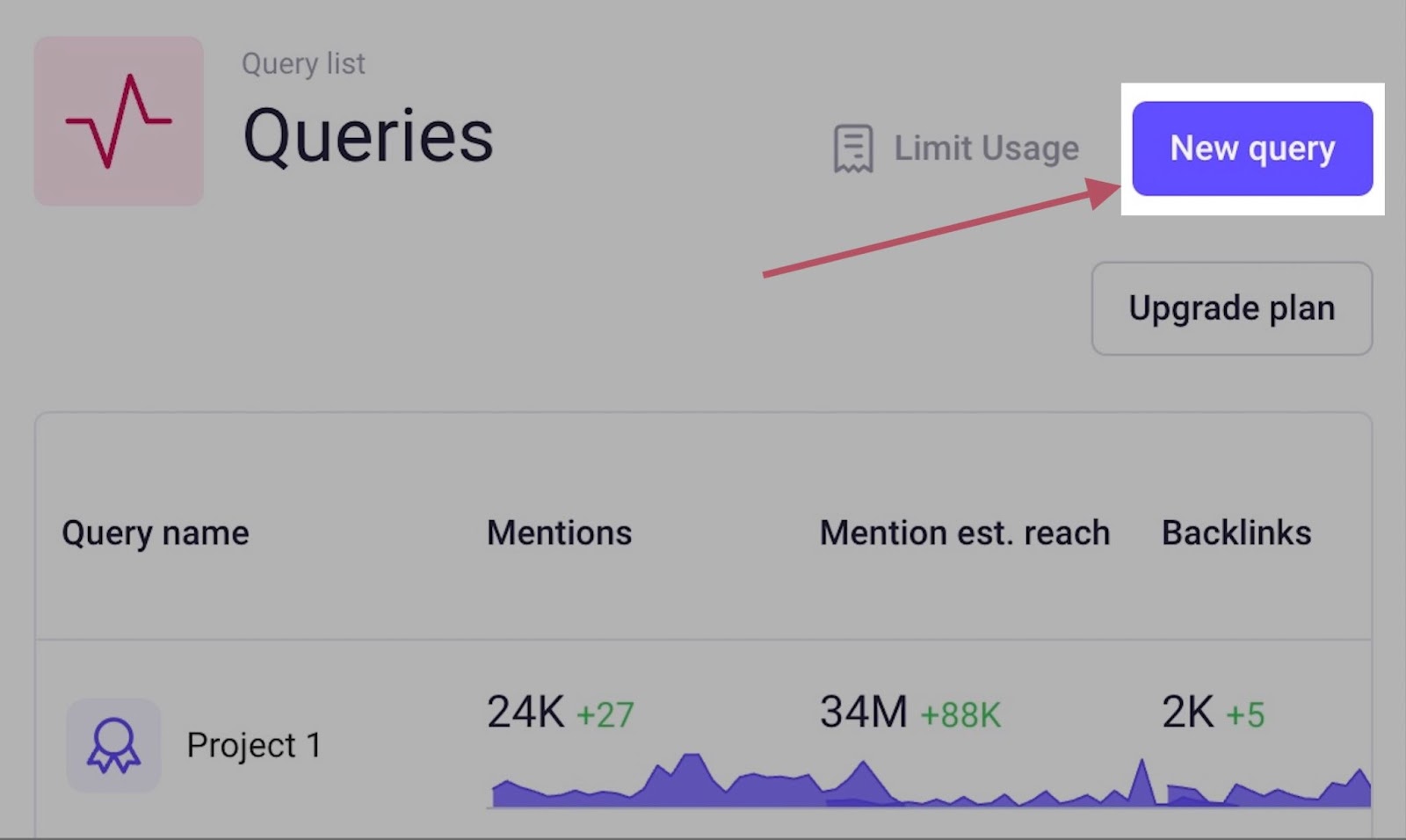
Then, select “ Trademark ”.
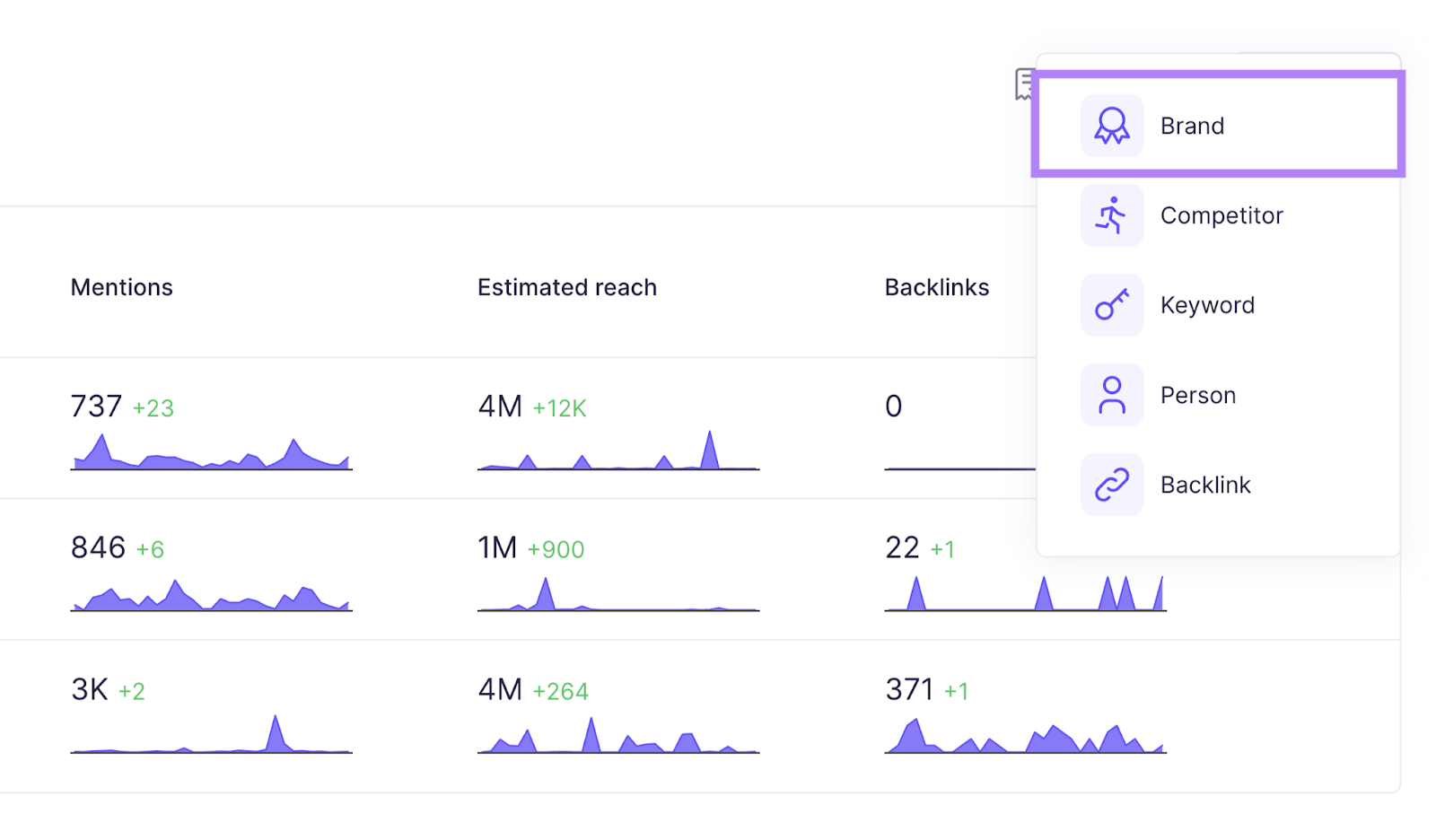
You will see a pop-up like below. And for best results, you should fill out all sections.
Pay special attention to:
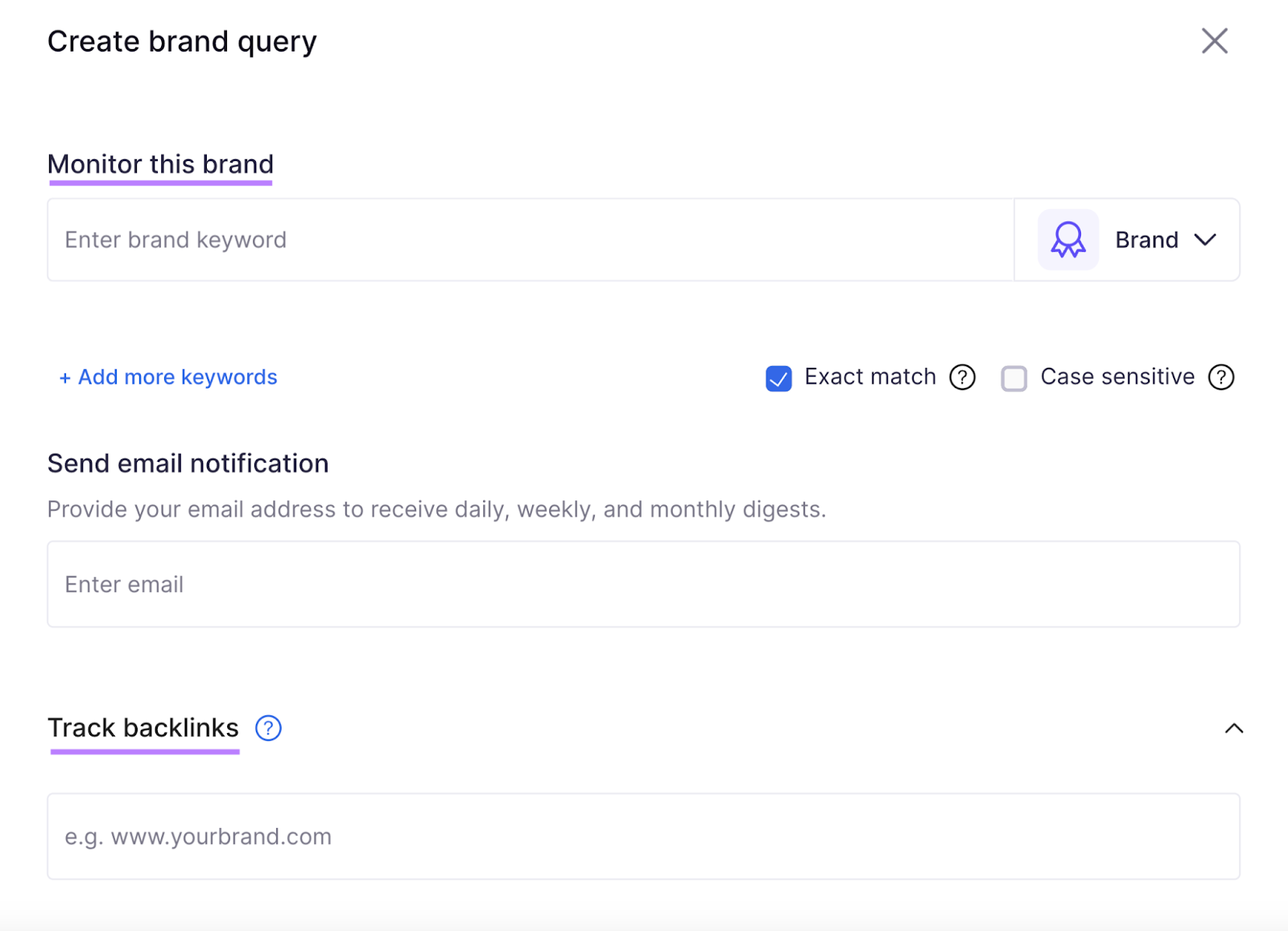
When you’re done, click “ Create queries ”.
You can then see a list of all the mentions found.
In the left menu, go to “ Details mentioned ” > “ Backlinks ” and select the circle next to “No backlinks” to focus on your unlinked brand mentions.
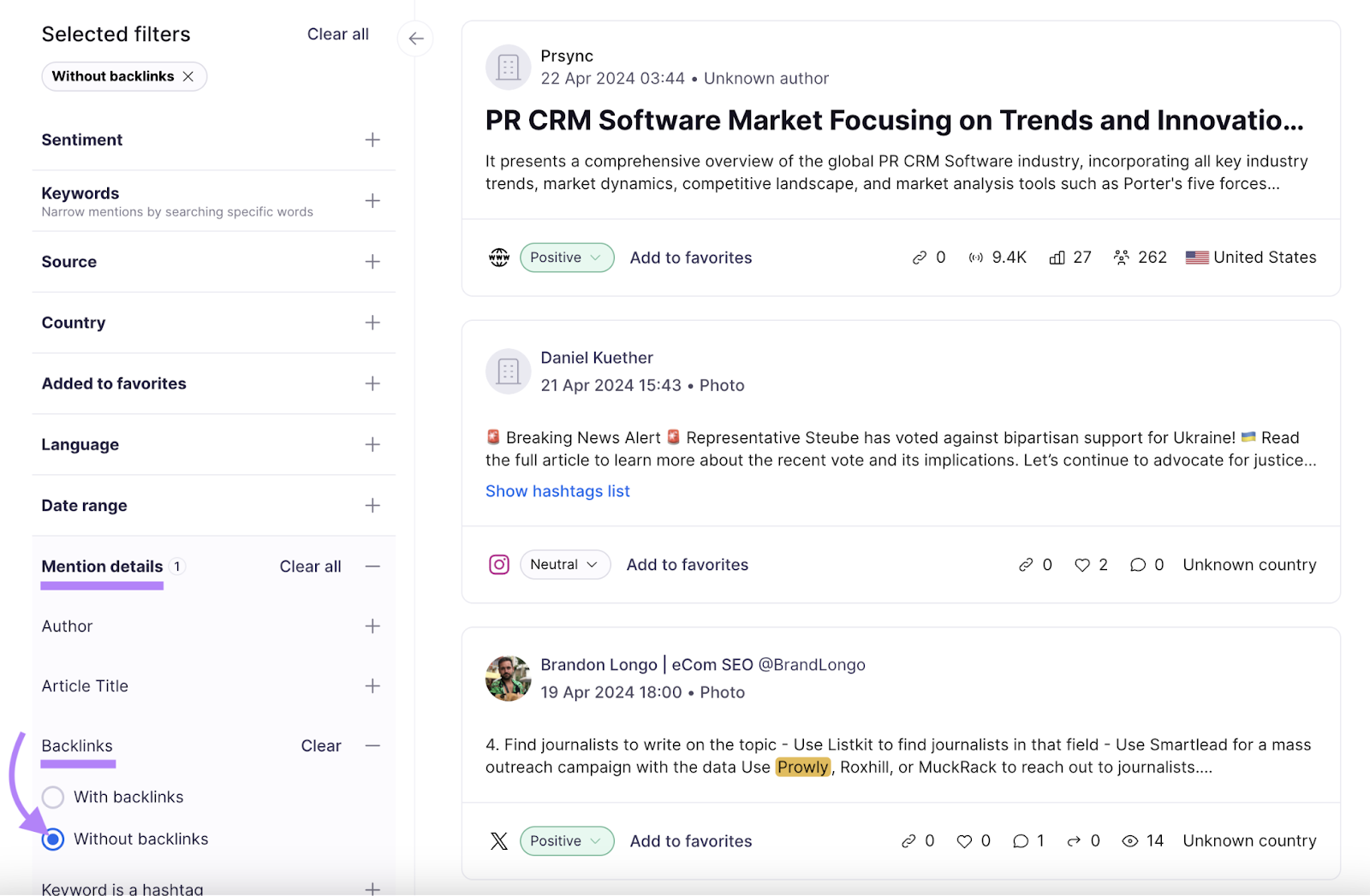
For each unlinked mention you find, consider contacting the page owner or author to kindly request a backlink.
Analyzing your competitors’ backlinks helps you replicate link building tactics that work for your competitors.
And it can tell you:
To get started, visit Semrush’s Backlink Analytics tool.
Enter your competitor’s domain name. Then, go to the “ Page is indexed ”.
This report shows a table with all of your competitors’ pages sorted by number of referring domains.
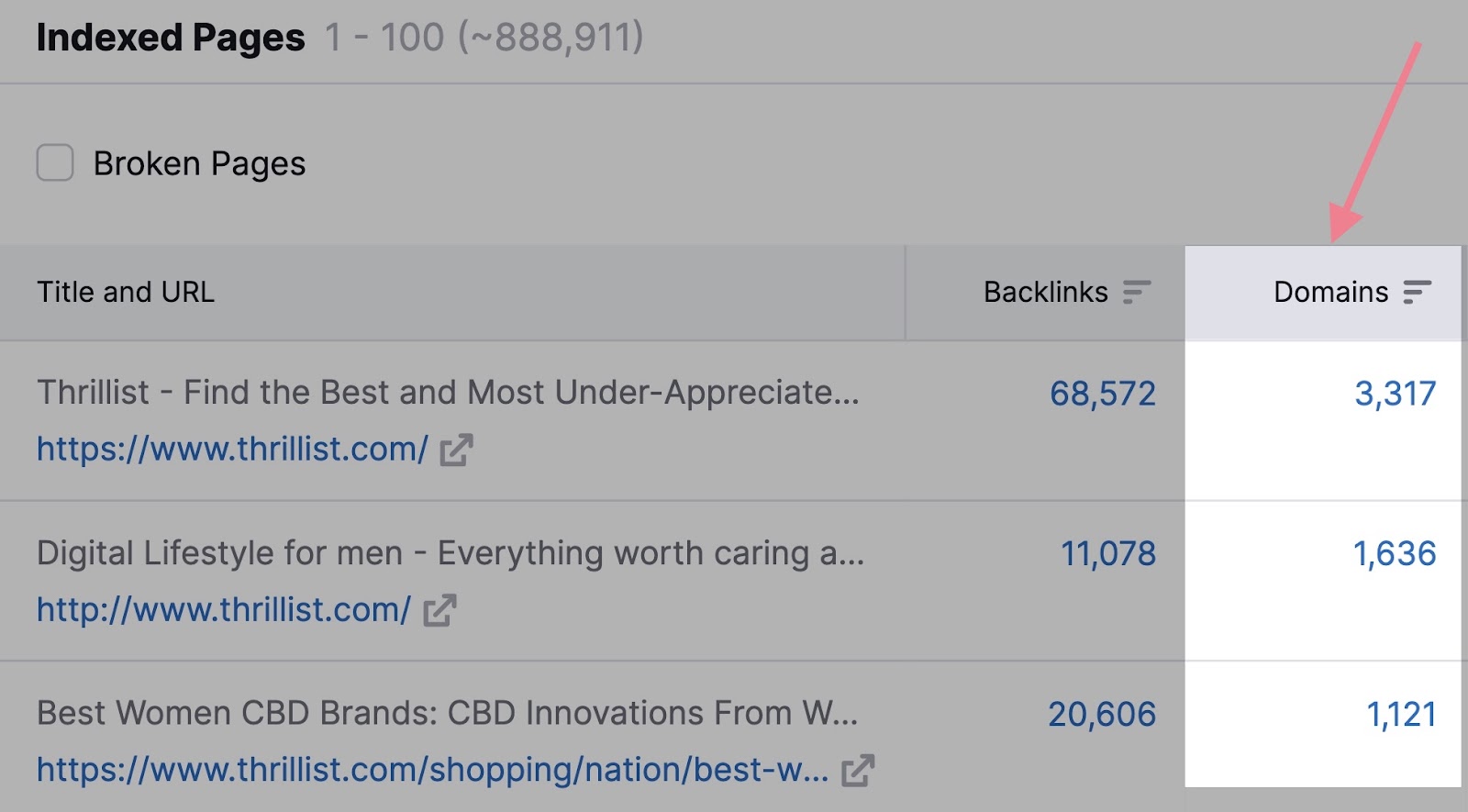
Click through to the best performing pages. And look for samples in terms of subject, style, length, and format.
For example, let’s say your competitor’s most linked pages all contain videos.
You may then decide to incorporate video into your content marketing strategy . And emphasize the quality of your videos when reaching out to backlink prospects.
Recovering backlinks you’ve lost (which can happen if the linking site updates content, deletes the page, or redirects the page) is often easier than building links from scratch. Because the website is ready to link to you from the beginning.
To easily find lost links, visit Semrush’s Backlink Checker tool .
And after setting it up, go to the “ Lost & Found ”.
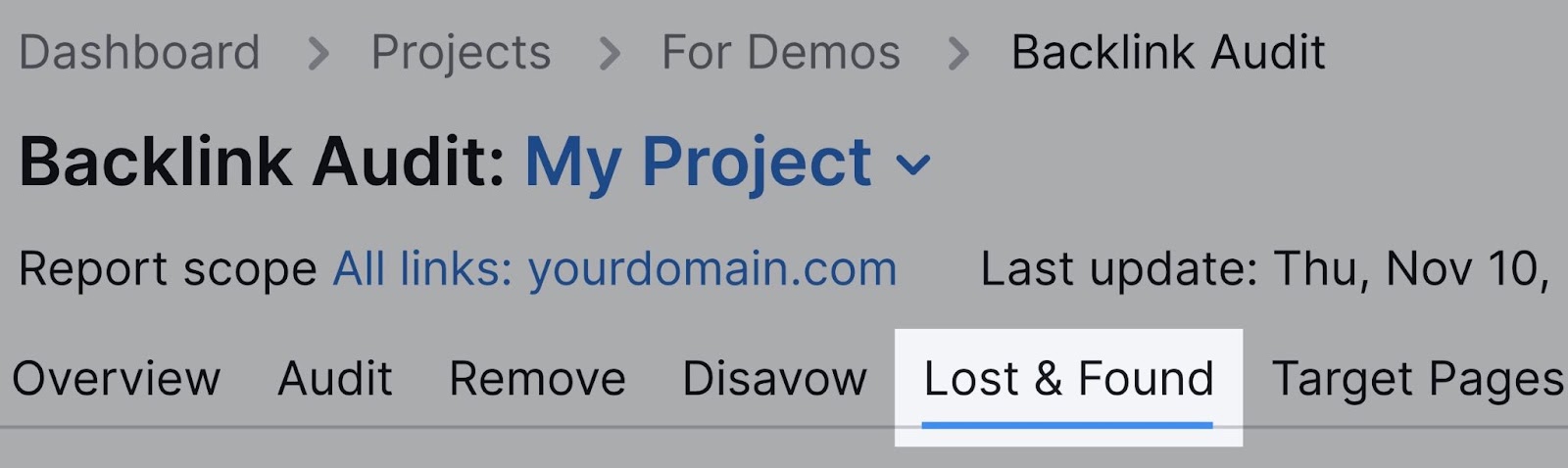
This report shows the number of referring domains that were purchased, damaged, or lost in the last 90 days.
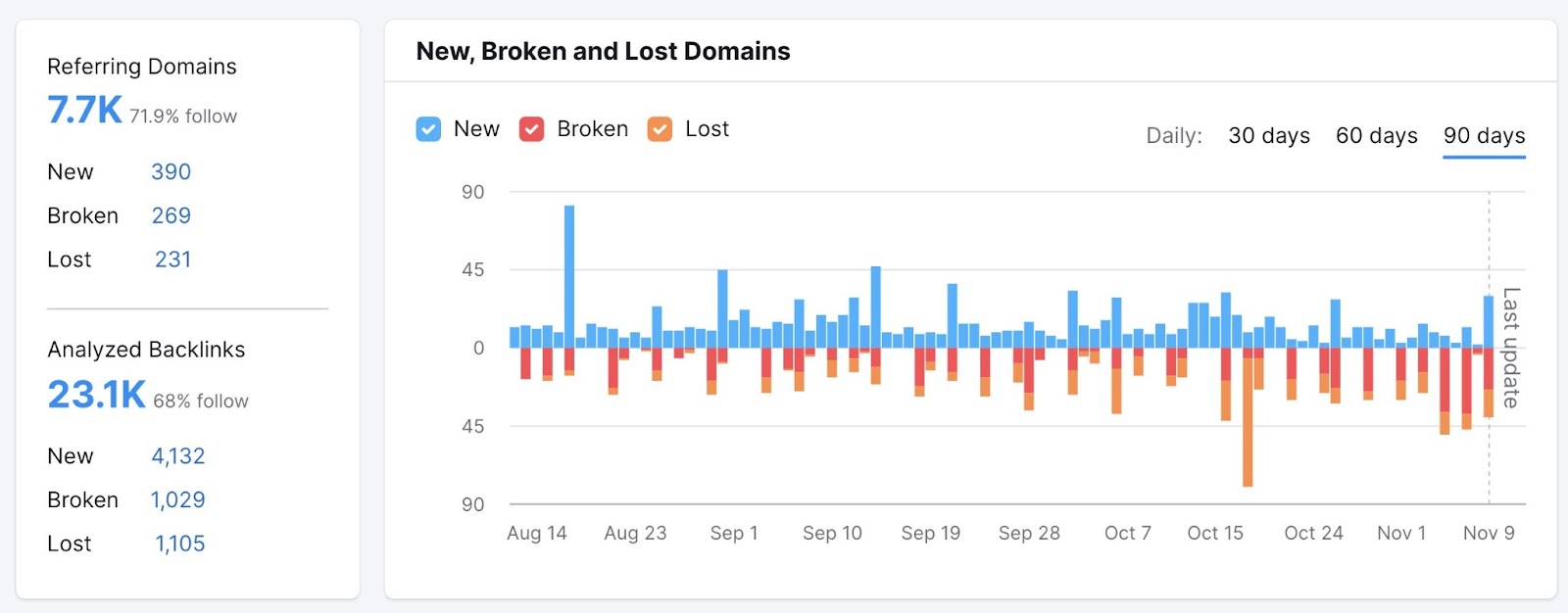
In this case, we are only interested in lost backlinks.
So scroll down and click on the box “ Lost ” at the top of the list.
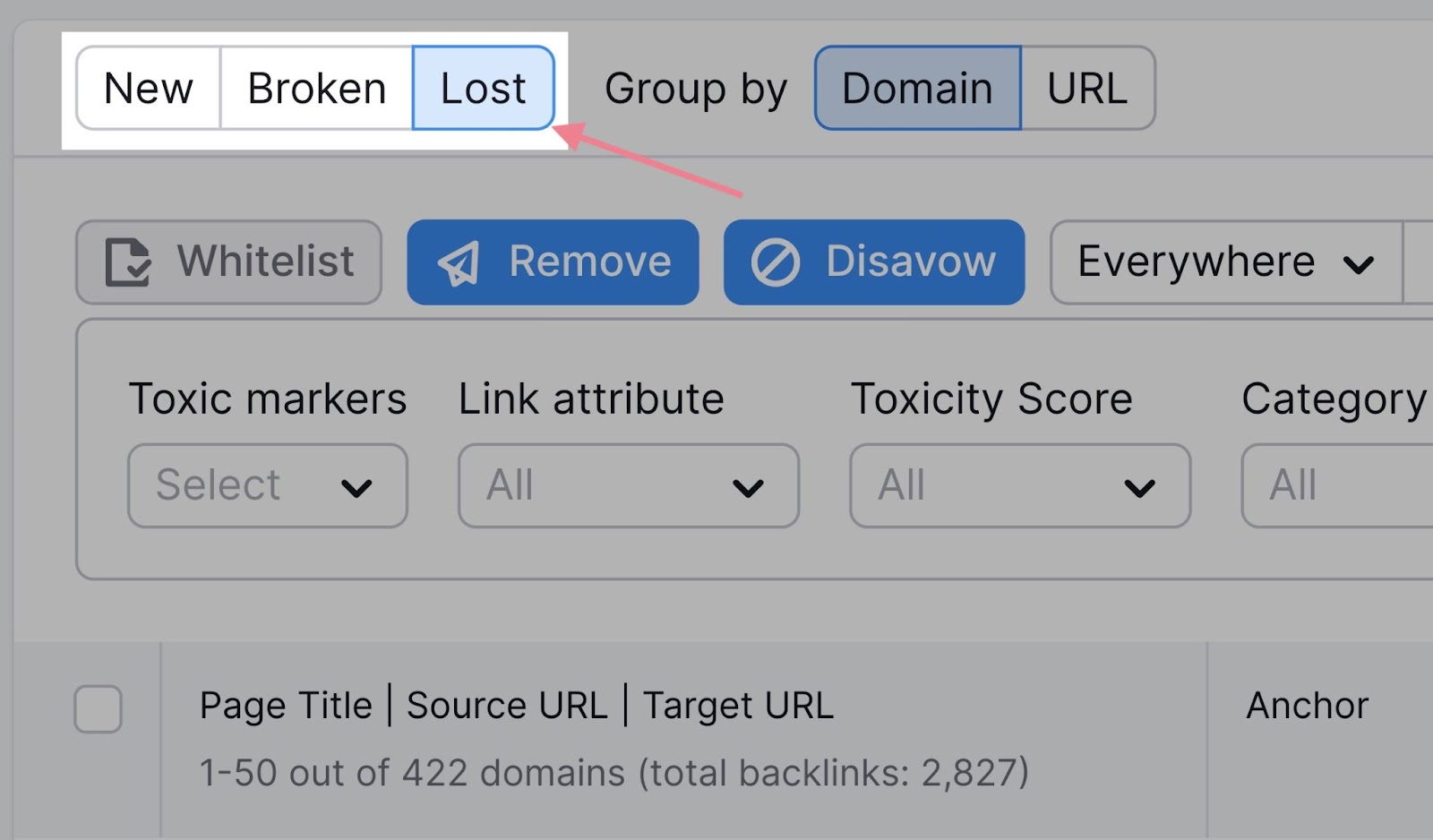
These are all the domains where you lost backlinks within the last three months.
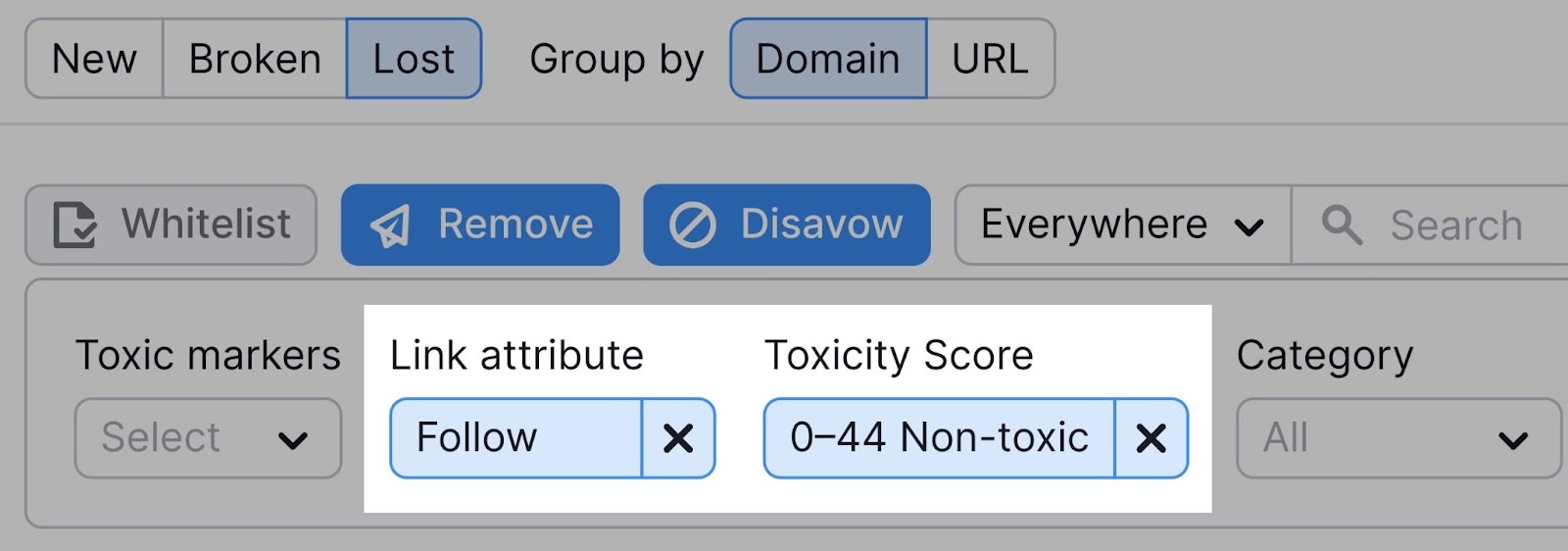
To help prioritize, filter the list to show available tracking links toxicity score low (these tend to be high authority sites).
Like so:
Next, visit each URL and try to figure out why you lost backlinks.
If you can find a suitable location for your link, consider reaching out.
Politely ask if there’s a specific reason why they removed your link (this is a great ice breaker). Then, explain why you think the link is still a useful addition to their content.
Hopefully you will get your link restored. Or get some helpful feedback.
Backlink gap analysis shows which websites link to your competitors, not to you.
If a site links to a competitor, they may also be willing to link to you. Especially if you create premium content.
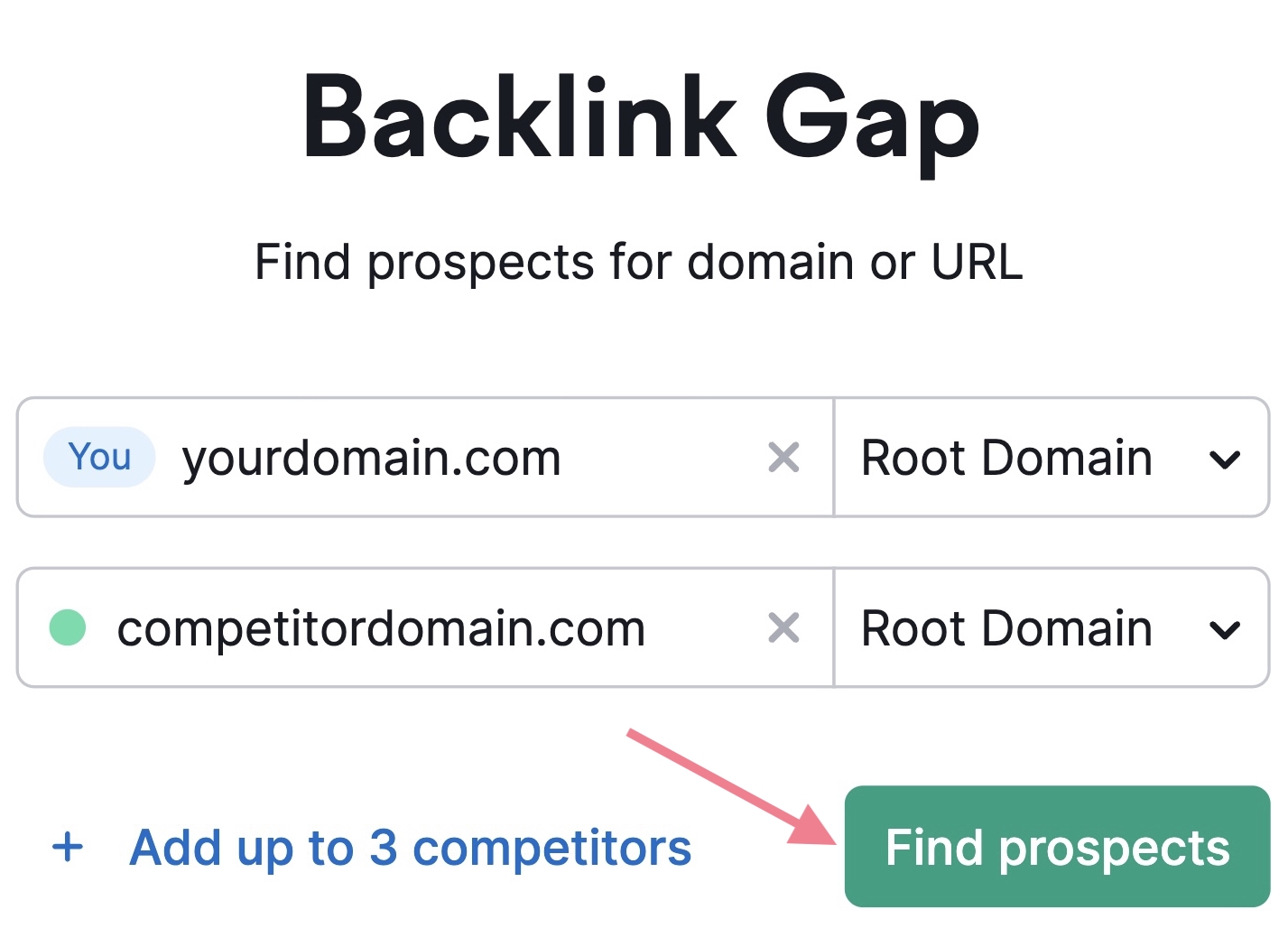
To get started, open the tool Backlink Gap by Semrush .
Add your domain name and your competitor’s domain name. And click “ Find potential customers ”.
The “Best” tab shows domains that link to all of your competitors but don’t link to you.
So, these are the backlinks with the strongest prospects.
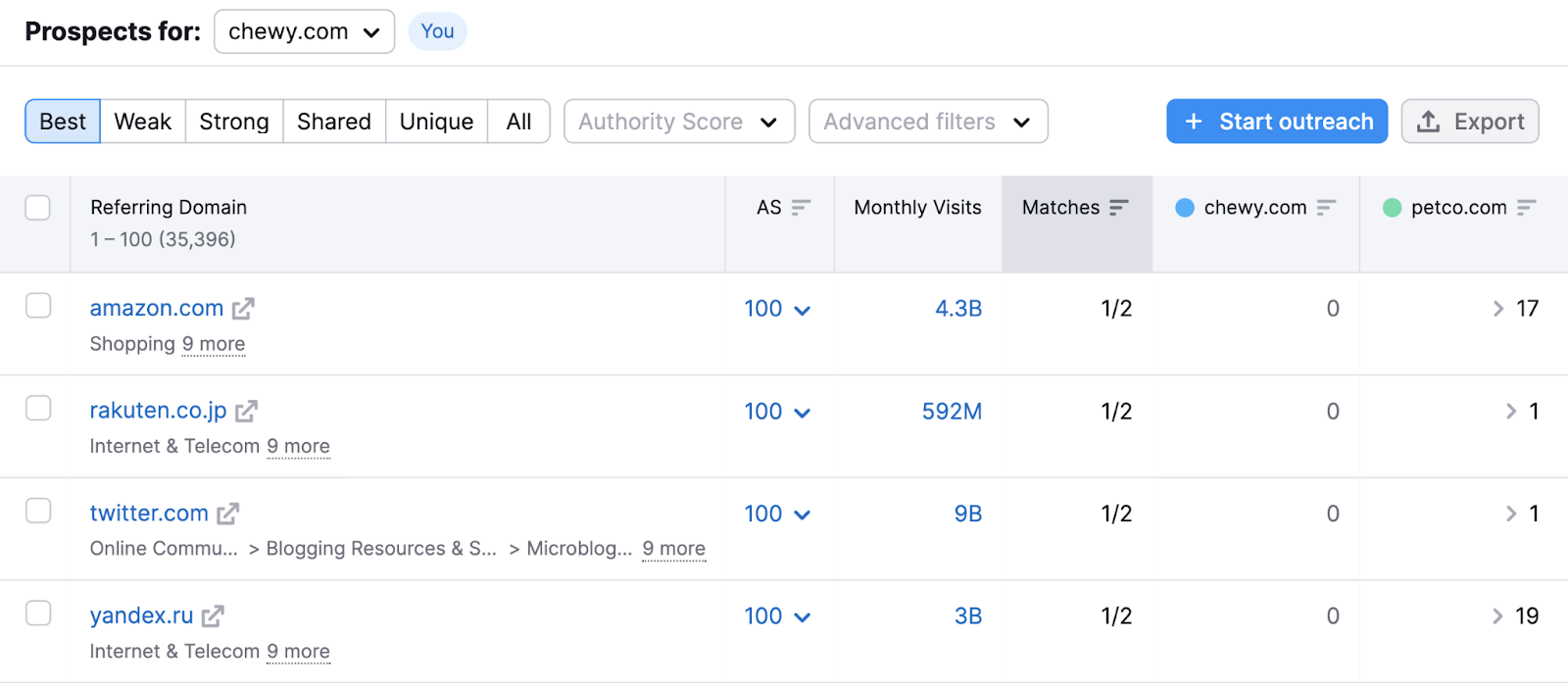
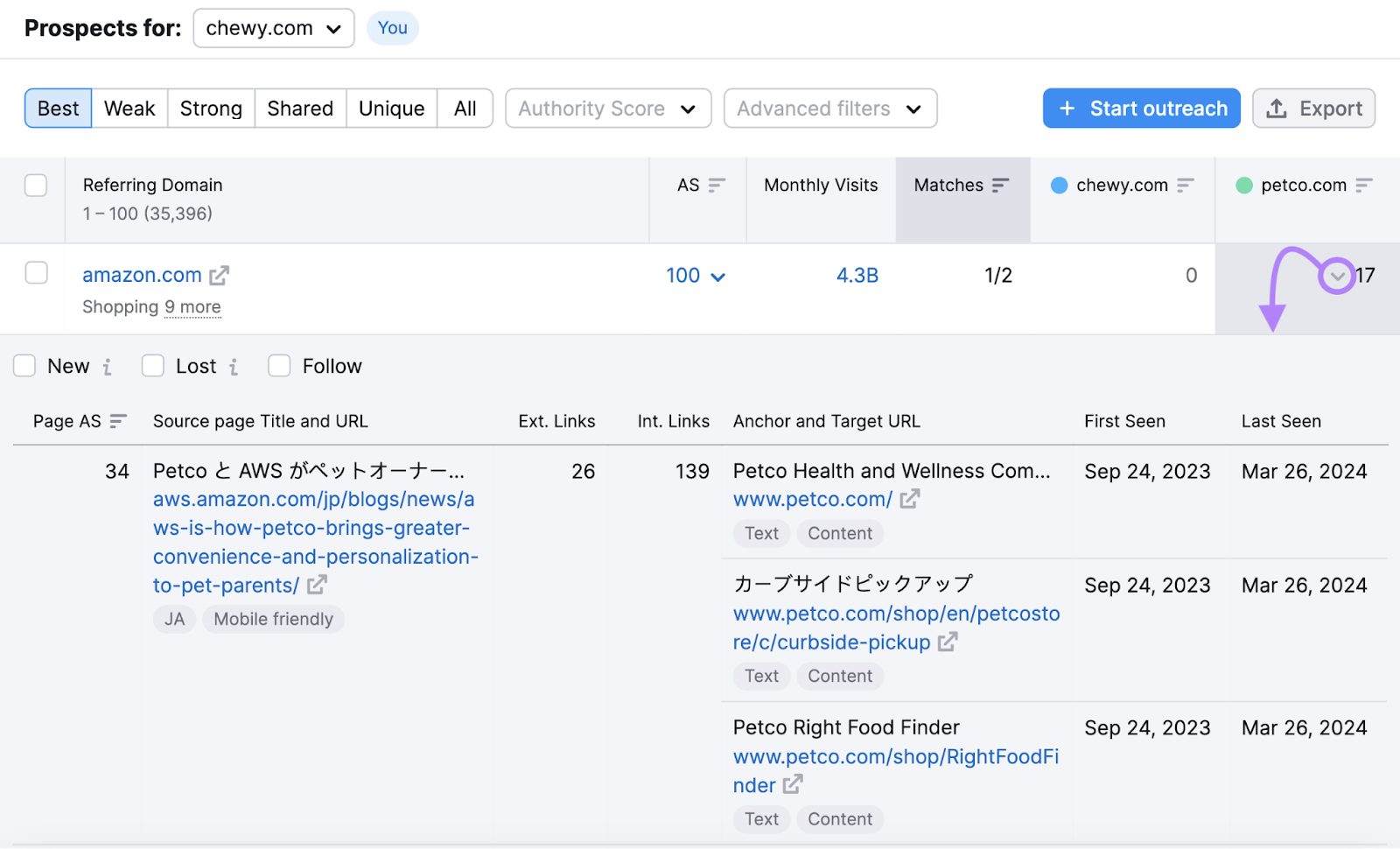
The column under each competitor’s domain shows the number of backlinks they have on each website.
Click the arrow next to one of those numbers to see details about backlinks from a specific domain. Include anchor text and target URL.
Check the boxes next to all the domains you want to contact.
Then click “ + Start Outreach ” to send them to Link building tools .
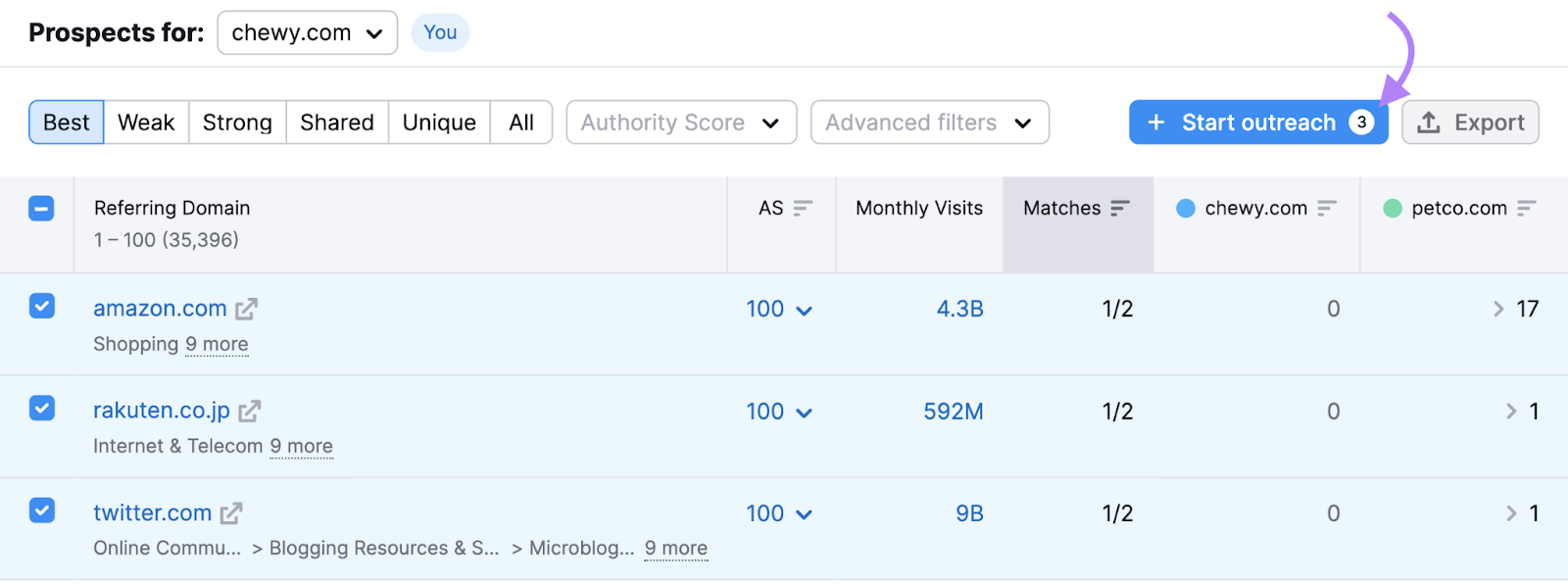
From there, you can manage the rest of the link building process.
Digital PR is the process of gaining online coverage for your brand. While becoming a source may fall under this tactic, it often involves creating an interesting story and then sharing it with relevant reporters through social networks. press reports .
Reporters covering your story can credit you with a link to your website.
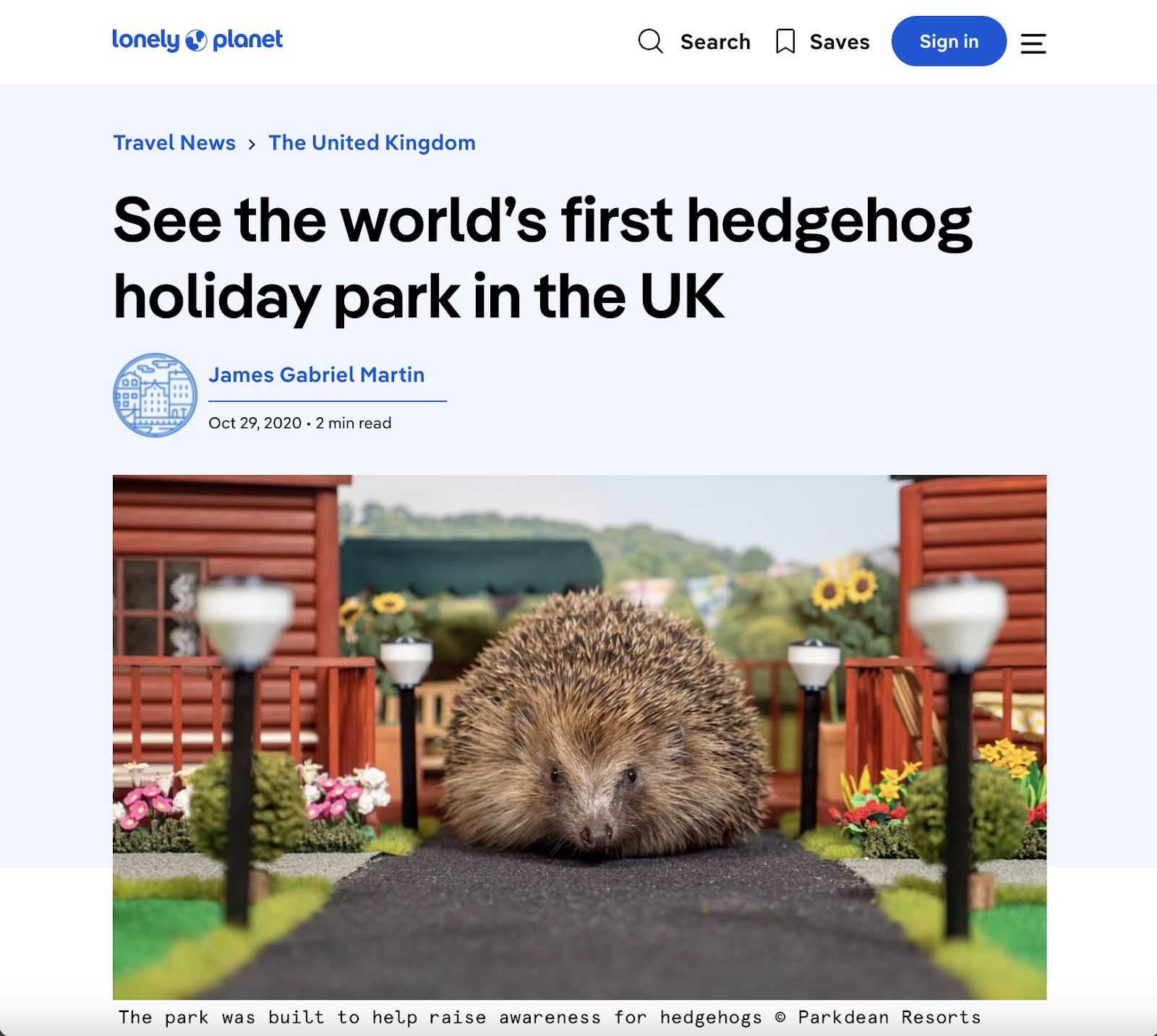
For example, holiday park operator Parkdean Resorts has created a mini holiday park for hedgehogs. And tie it to a news story about endangered hedgehogs.
They received press coverage (and backlinks) on several websites. Includes Lonely Planet:
We recommend running link building audits monthly (or more frequently). To track earned links, lost links, and overall backlink quality.
Use Semrush’s Backlink Checker tool to do this.
After setting up the tool, click on the settings icon in the upper right.
Then click “ Schedule for re-collecting information ”.
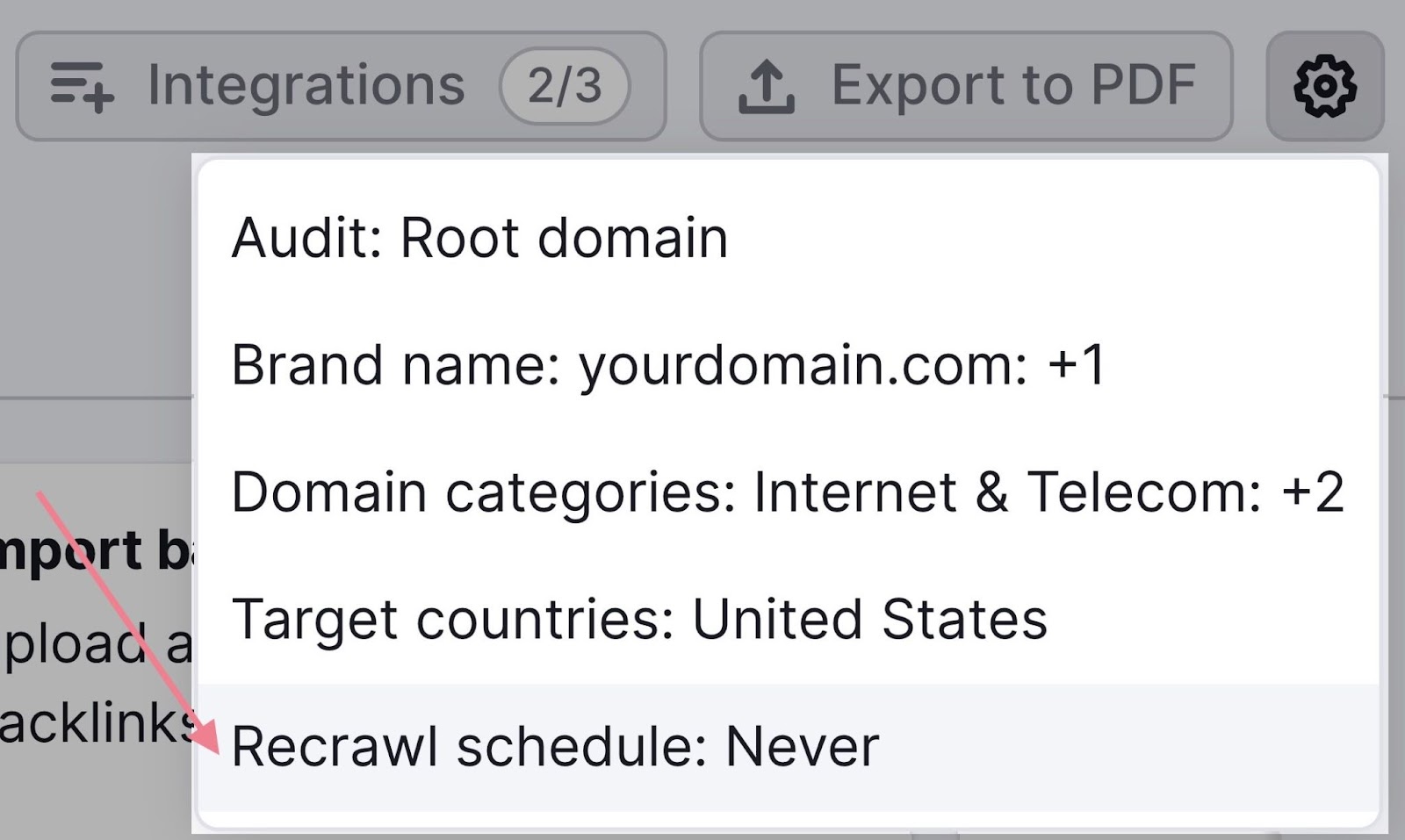
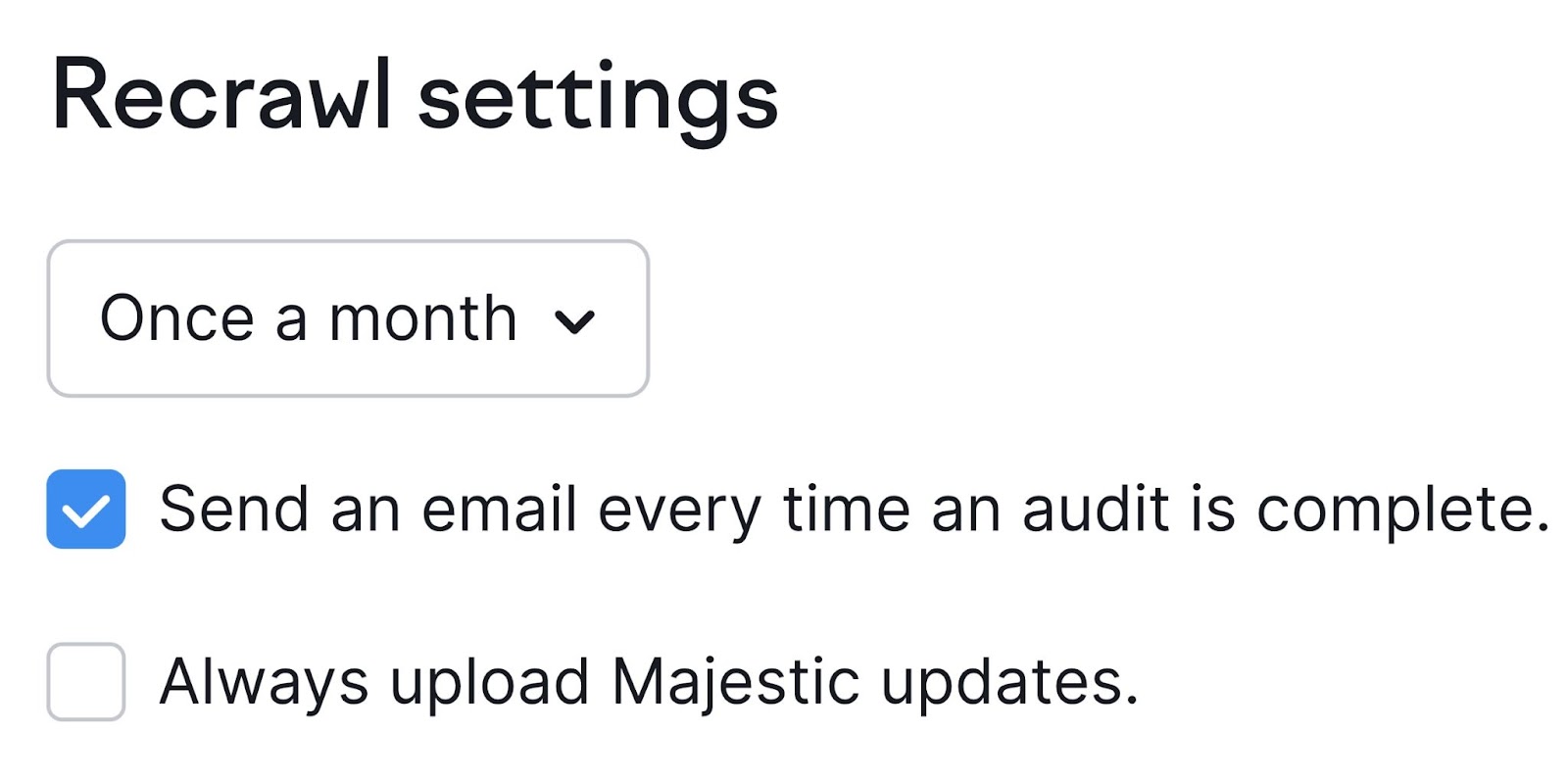
Select “Once a month” in the drop-down menu. And check the box next to “Send an email every time a test is complete.”
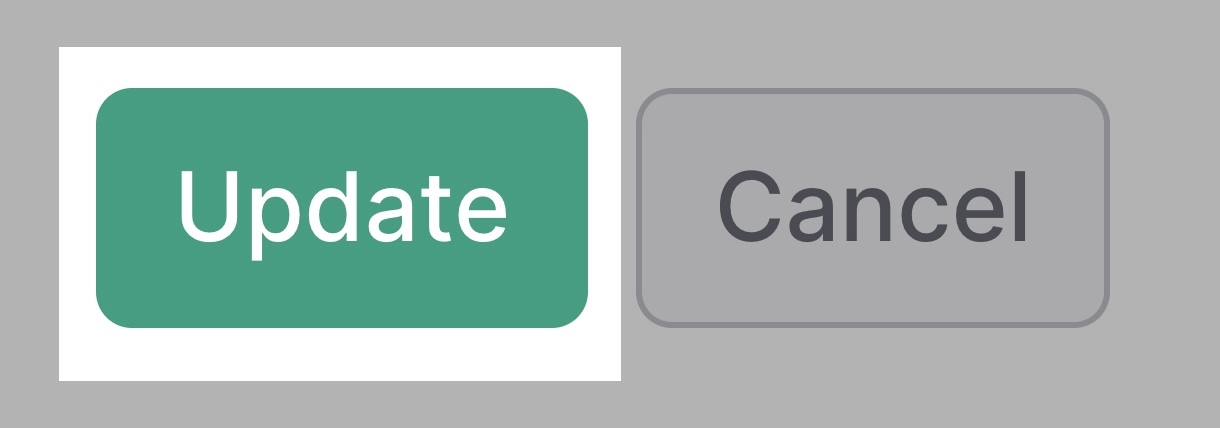
Then click “ Update ”.
You will now receive monthly notifications of your latest checks.
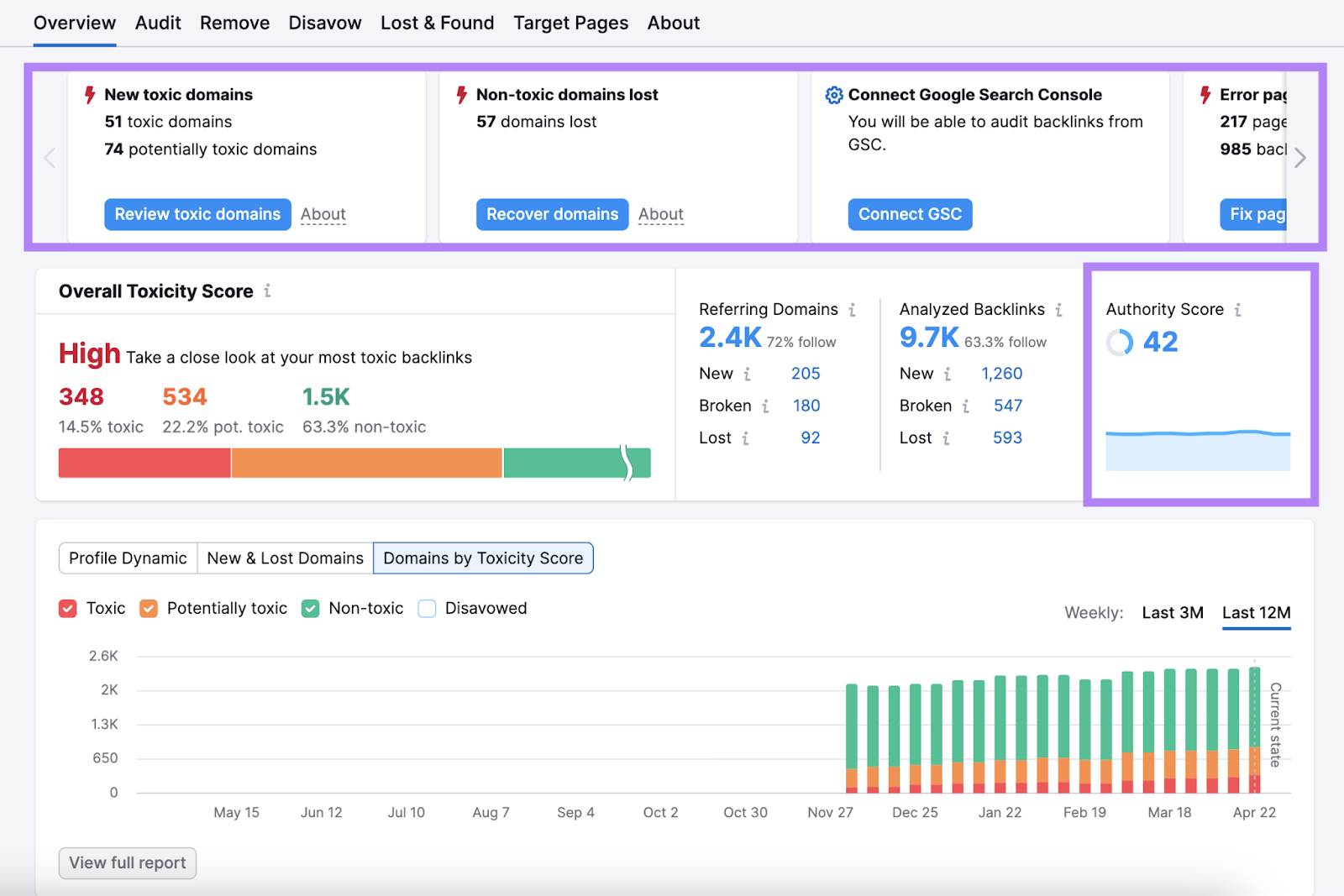
In the “Overview” section of the inspection, you can learn about potential problems. (Such as backlinks you’ve lost. Or links to broken pages on your site.) And get help fixing them.
Additionally, you can track your website’s Authority Score.
This will increase as your backlink profile strengthens. But remember that even small increases can bring in a lot of work and links.
With Semrush’s link building tools, you can get the insights and support you need to get quality backlinks. And improve your SEO results.


Group buying website for tools
World's leading

Youtube ToolsClick
A guide from A to Z

Fanpage
Top quality

Group ToolsClick
Technical Support & Gifts

ToolsClick Software
Proprietary software